
Disclosure: As an Amazon Associate I earn from qualifying purchases at no extra cost to you.
Raise pastured chickens deep in the hills of Southern Hokkaido for a full year and you inevitably slam into two walls: rain turns stationary runs into ankle-deep mud,
and predator pressure shifts dramatically from summer into autumn as feral cats, Ezo red foxes, and hawks descend from the mountains.
Framing a 30-hen chicken tractor out of heavy 2×4 dimensional lumber makes it an immovable tank.
Instead, I built one single integrated 30-hen mobile chicken coop framed from bent galvanized greenhouse hoop pipes and
16 mm hex predator mesh—combining a tarped rear roost/nest shelter and
an open-air front mesh run inside one continuous frame light enough for one person to pull solo by hand
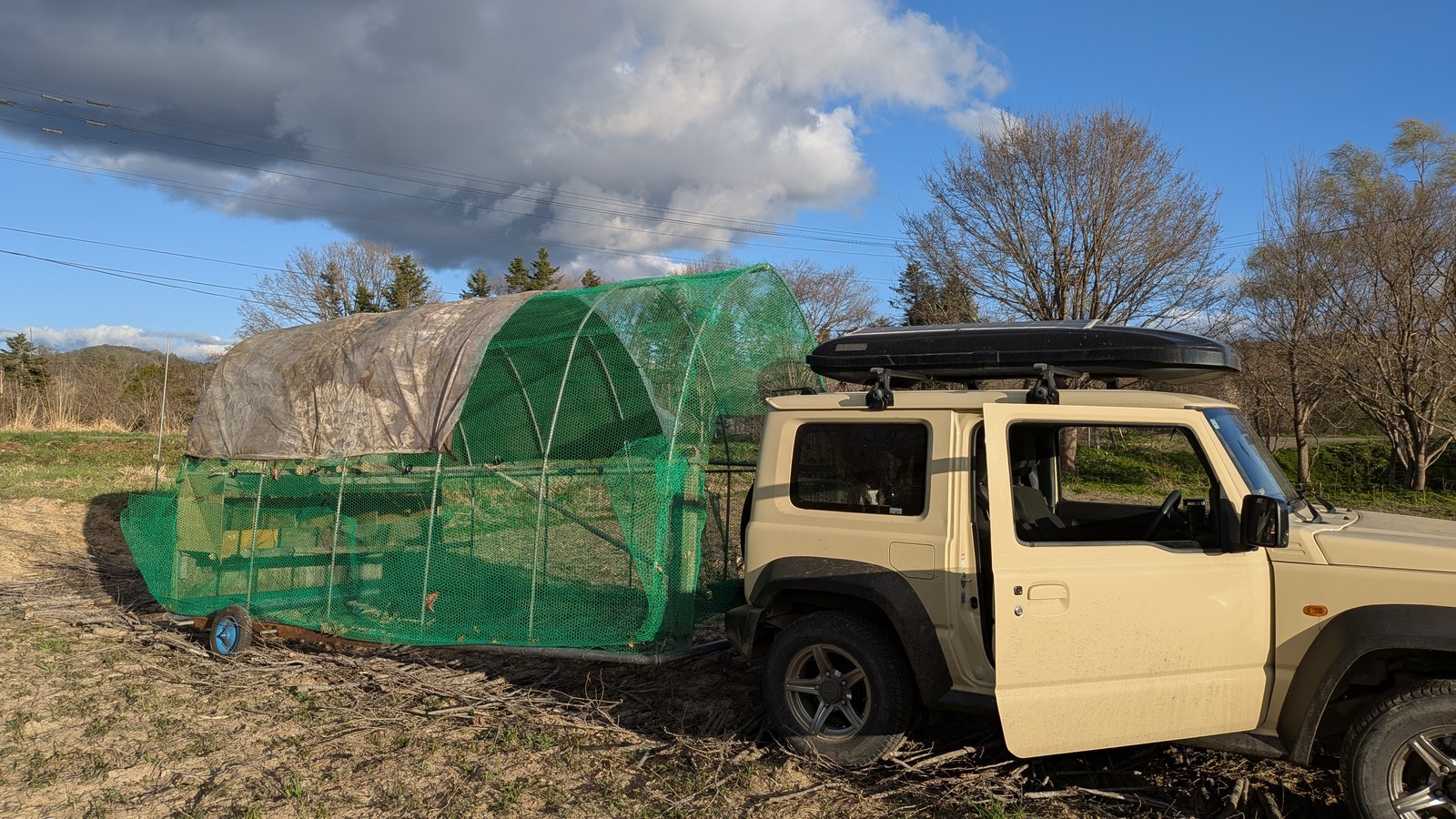
across pasture (while also hitching to my Suzuki Jimny Sierra JB74W for long spring hauls or muddy pulls).
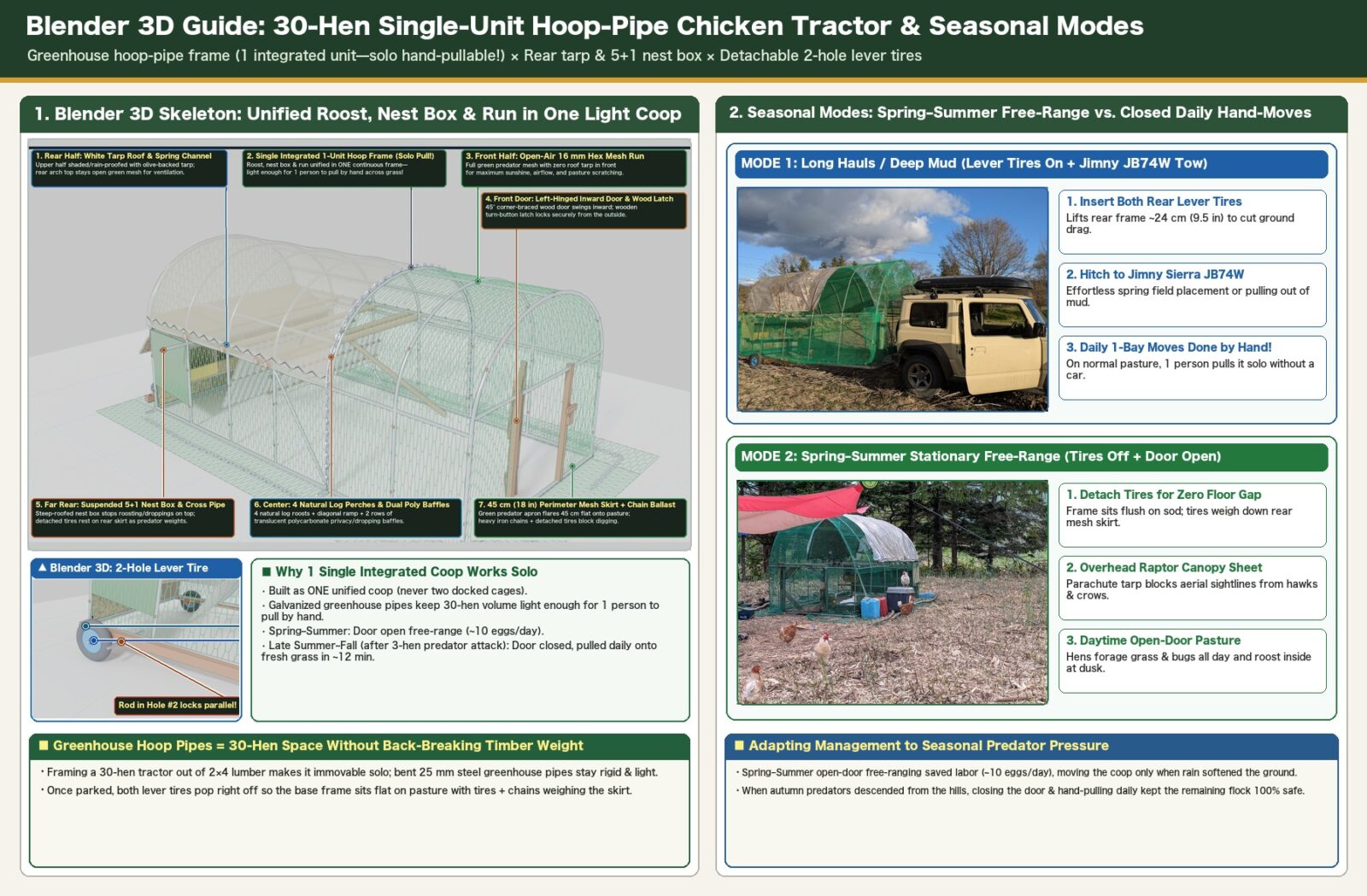
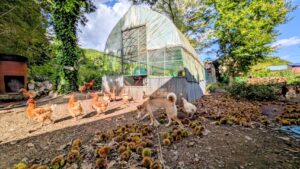
- Spring–Summer Mode (Open-Door Free-Range): Parked stationary with the door wide open (~10 eggs/day, zero coop cleaning); hens return to roost automatically at dusk, and we tow it with the Jimny only when rain softens the sod.
- Late Summer–Autumn Mode (Closed Door + Daily Solo Hand-Pull): After an autumn predator attack killed 3 free-ranging hens, we closed the door on this same single integrated coop and pull it onto fresh grass by hand once every morning.
- Detachable Two-Hole Lever Tires + Skirt Ballast: Two solid wheelbarrow tires on two-hole wooden lever arms jack the rear up ~24 cm (9.5 in) for moving, then pop completely off so the frame sits flush on pasture—with both detached tires + heavy iron chains weighing down the 45 cm (18 in) predator mesh skirt.
 けっち
Unifying the shaded roost/nest shelter and
the sunny front mesh run inside a single greenhouse-pipe frame keeps 30-hen volume light enough for me to pull solo
by hand in 12 minutes flat—and popping the lever tires off turns the wheels themselves into predator-skirt weights!
1. Spring–Summer Mode: Jimny Field Placement & Open-Door Free-Range (~10 Eggs/Day)
Using 19 mm / 22 mm (3/4-inch) bent steel greenhouse arches and straight purlins gave me wind-tested structural curves at a fraction of lumber weight.
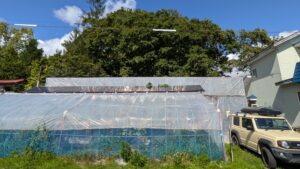
For initial spring field placement—or pulling off soggy mud after heavy rain—we slip the two blue-hubbed wooden lever wheels onto the rear pins and
tow the front rope gently with my Suzuki Jimny Sierra (JB74W).
Once parked, both wheel arms come completely off so zero gap remains under the base rails.
Visitors always ask: “If you leave 30 hens free-ranging outside all day,
how on earth do you herd 30 chickens back inside every evening?” The answer is simple: you don’t chase a single bird.
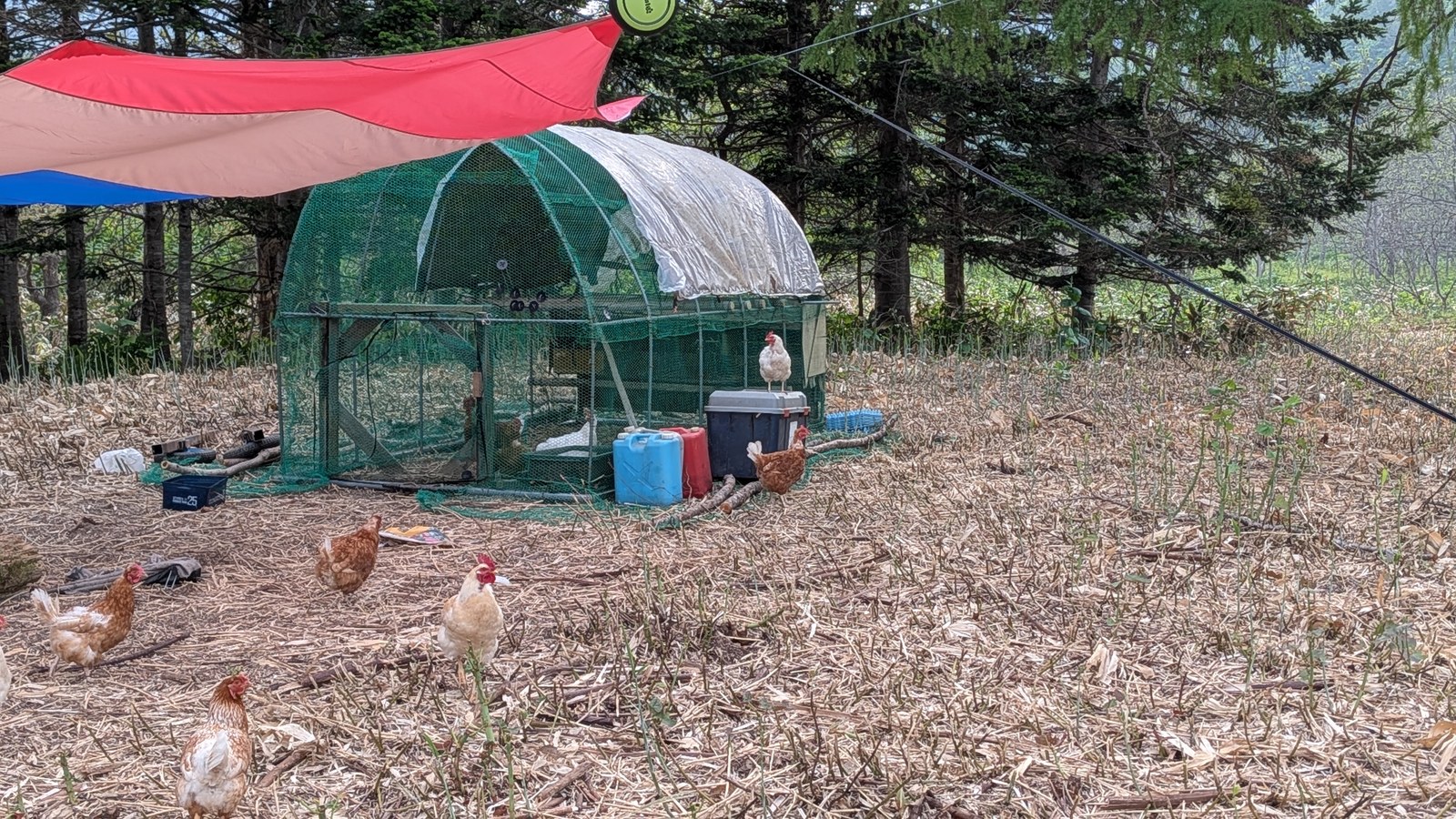
Adult chickens have a rock-solid homing/roosting instinct: as twilight falls, all 30 hens march straight back inside onto their elevated log perches on their own,
and during the day they walk back inside the darkened rear nest box to lay (~10 clean eggs/day with zero coop mucking).
2. Late-Summer Turning Point: The 3-Hen Attack & Forensic Predator Check
Open-door summer bliss ended abruptly as late summer cooled into early autumn and mountain predators moved downslope.
One afternoon I found three free-ranging hens killed with very specific forensic clues: feathers had been plucked right on the spot rather than carried off whole,
only small portions of breast/neck meat were eaten (suggesting a small mouth), and both large raptors overhead and numerous feral cats prowl our valley.
| Suspect Predator | Documented Field Forensics | Match with Our Crime Scene |
|---|---|---|
| 1. Feral Cat / Small Carnivore | Too small to drag an adult hen far; typically chews partial breast/neck meat and leaves the carcass behind. | Matches our high local feral-cat count, small bite marks, and uneaten body mass. |
| 2. Raptor (Northern Goshawk / Buzzard) | Pins prey on the spot, methodically plucks feathers in piles with its hooked beak, and strips soft breast meat. | Matches the neat feather-plucking rings on site and large hawks spotted circling nearby. |
3. Full Blender 3D Anatomy of Our Solo-Pullable 1-Unit Hoop-Pipe Tractor
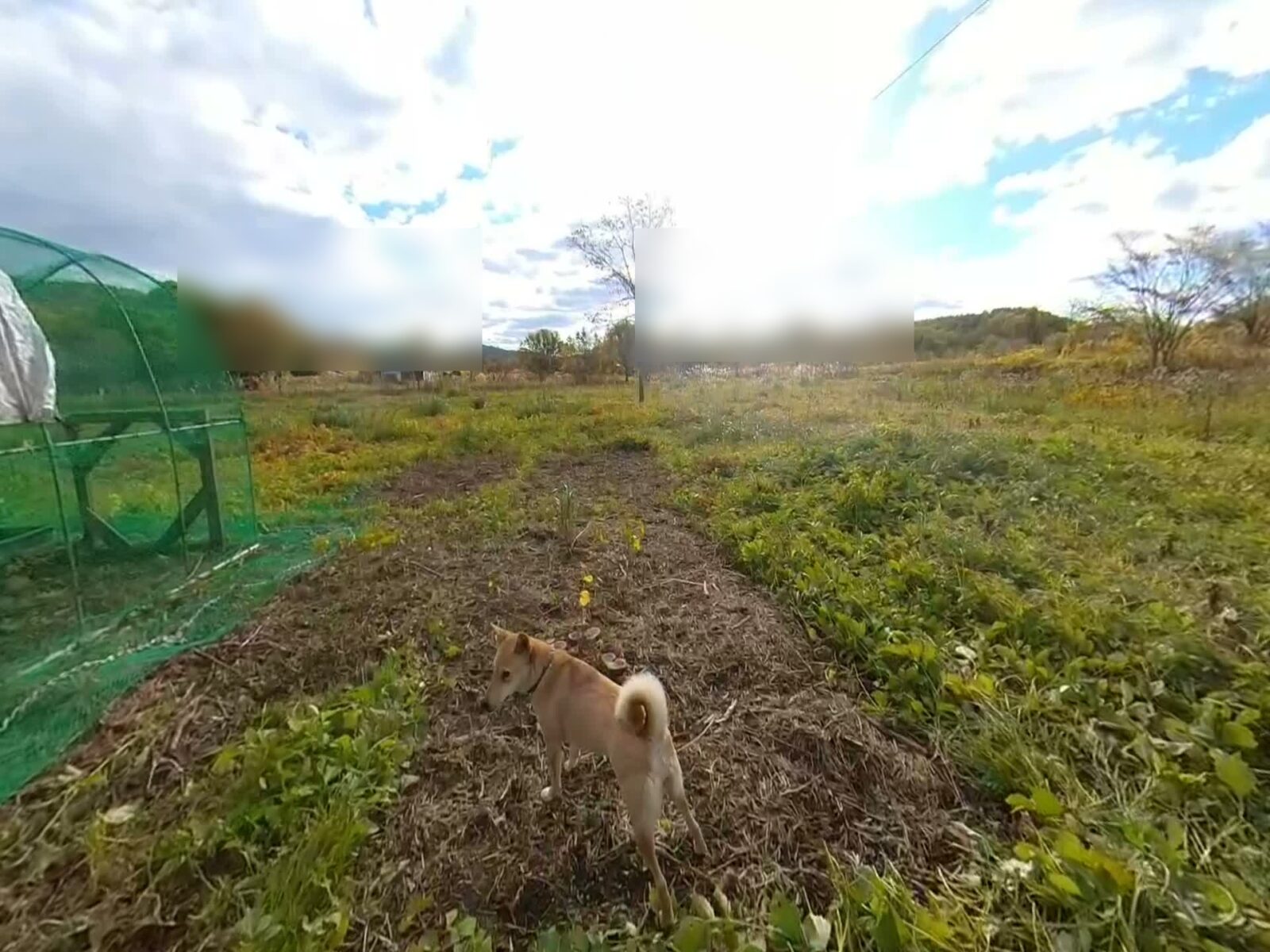
From that afternoon forward, open-door free-ranging stopped: we keep the front door latched and
hand-pull our single integrated coop onto a fresh patch of pasture once every morning.
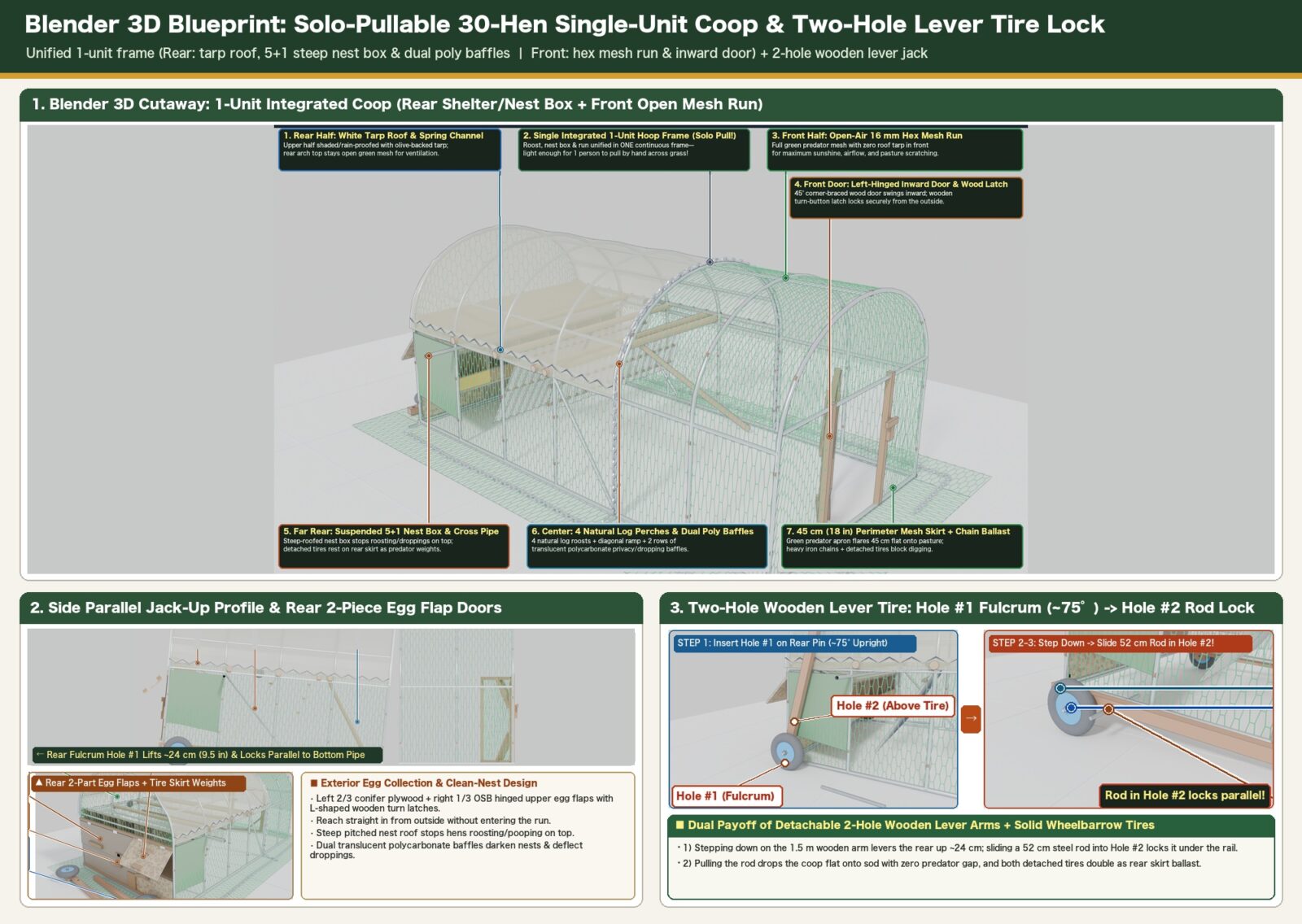
| Zone / Subsystem | Verified Materials & Build Spec | Field Function & Homestead Ingenuity |
|---|---|---|
| Rear Shelter Exterior & Egg Flaps | Bent hoop pipes + waist-up white waterproof tarp (wiggle-wire channel) + 2-part conifer plywood/OSB upper hinged egg flaps with L-shaped wood latches. | Blocks rain & sun overhead while keeping lower mesh & arch peak open for airflow; lift rear flaps to gather eggs from outside without entering. |
| Rear Interior (Nest Box, Perches & Poly Baffles) | Suspended 5+1 compartment nest box (cross steel pipe) with steep pitched plywood roof + 4 natural log perches + 2 rows of translucent corrugated polycarbonate baffles. | Steep roof stops hens roosting/pooping on the nest box; washable dual poly sheets (front slatted privacy screen + rear ~60° slope) dim the nests and deflect droppings far better than cloth curtains. |
| Front Open-Air Run & Door | Continuous front half wrapped in 16 mm (5/8-in) galvanized hex mesh + left-hinged inward-swinging 45°-braced wood door with exterior turn-button latch. | Zero roof tarp in front maximizes sunshine, pasture airflow, and weight savings so 1 person can pull the whole coop by hand. |
| 45 cm Predator Apron & Ballast | 45 cm (18 in) flaring green predator-mesh skirt around entire base + heavy iron chains + both detached lever tires. | Hugs uneven pasture contours; laying heavy chains and the two detached tires on top stops foxes, cats, and weasels from digging or nose-lifting under. |
| Detachable Two-Hole Lever Wheels | Pair of solid flat-free wheelbarrow tires bolted onto 1.5 m wooden arms drilled with Hole #1 (end fulcrum) & Hole #2 (lock pin) + 52 cm steel lock rod. | Insert Hole #1 onto rear bottom pin (~75° upright), step down to lever coop up ~24 cm, and slide steel rod through Hole #2 under the bottom rail to lock hands-free! |
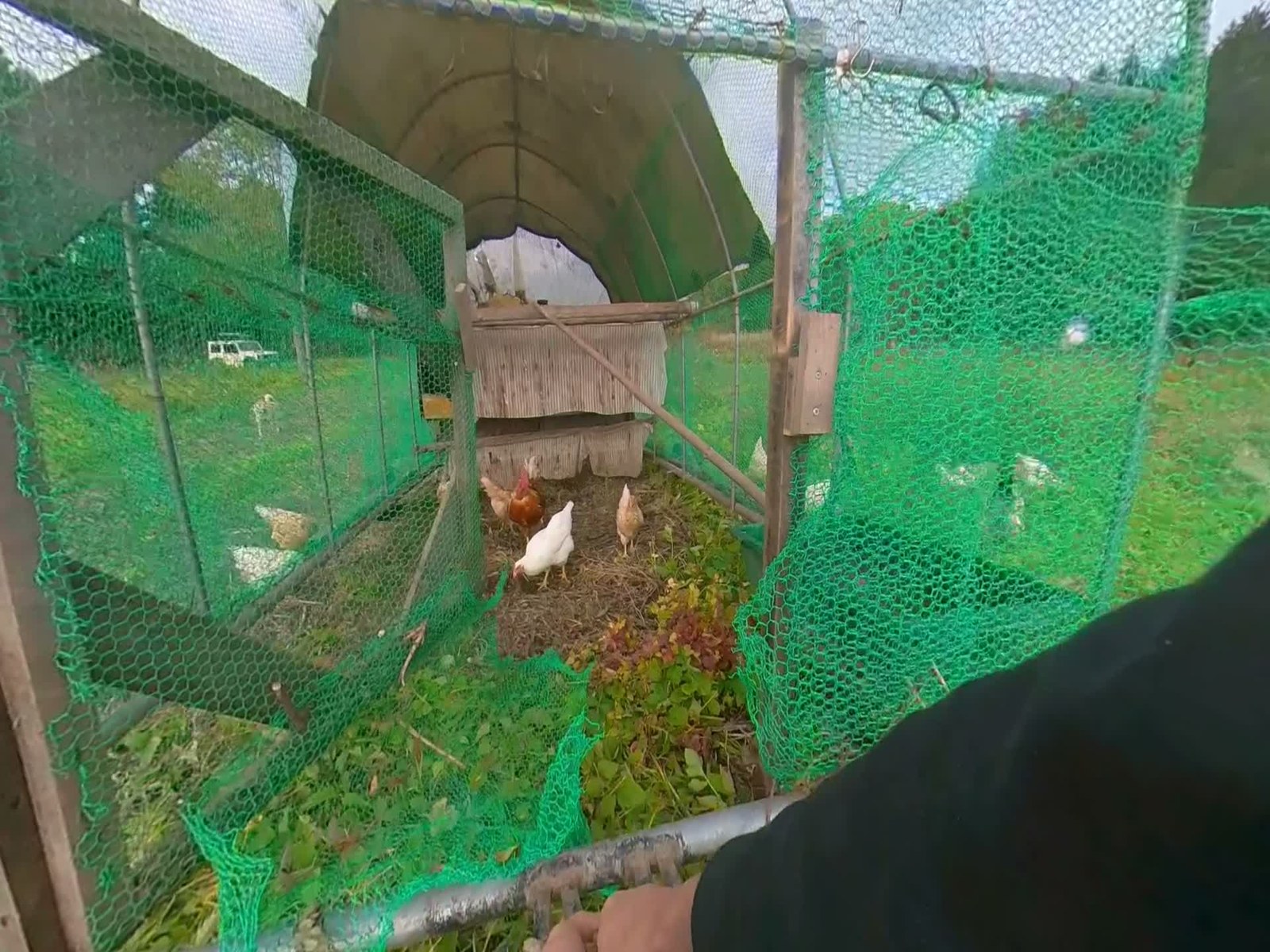
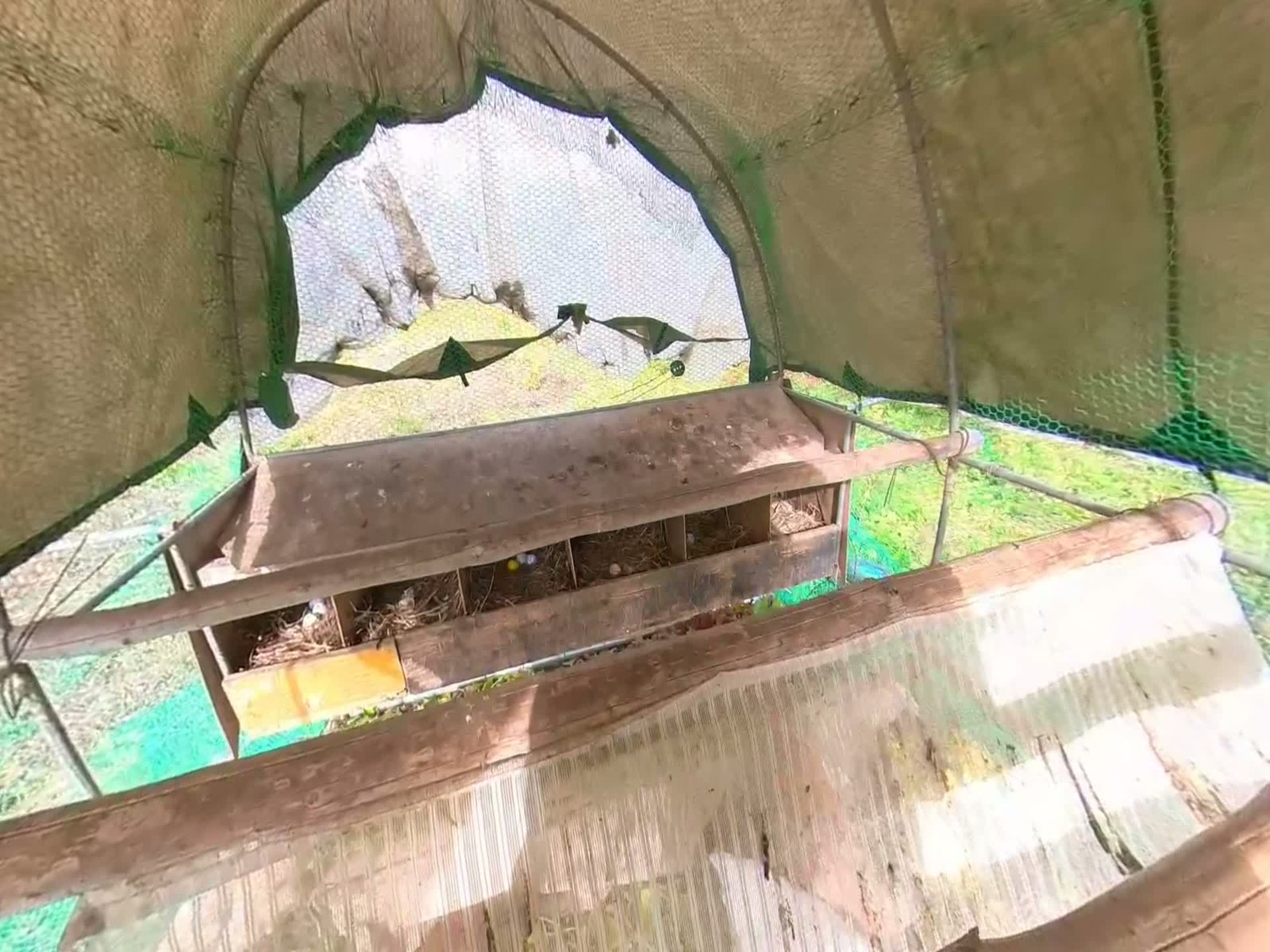
4. The 12-Minute Morning Routine: Lever-Lock, Solo Pull, Skirt Ballast & Grain
Leaving wheels permanently bolted onto a pasture tractor leaves floor gaps that weasels and feral cats exploit immediately.
Our daily rhythm solves both mobility and predator sealing in roughly 12 minutes every morning:
Step 1: Lift the Iron Chains & Two Detached Lever Tires Off the Predator Skirt
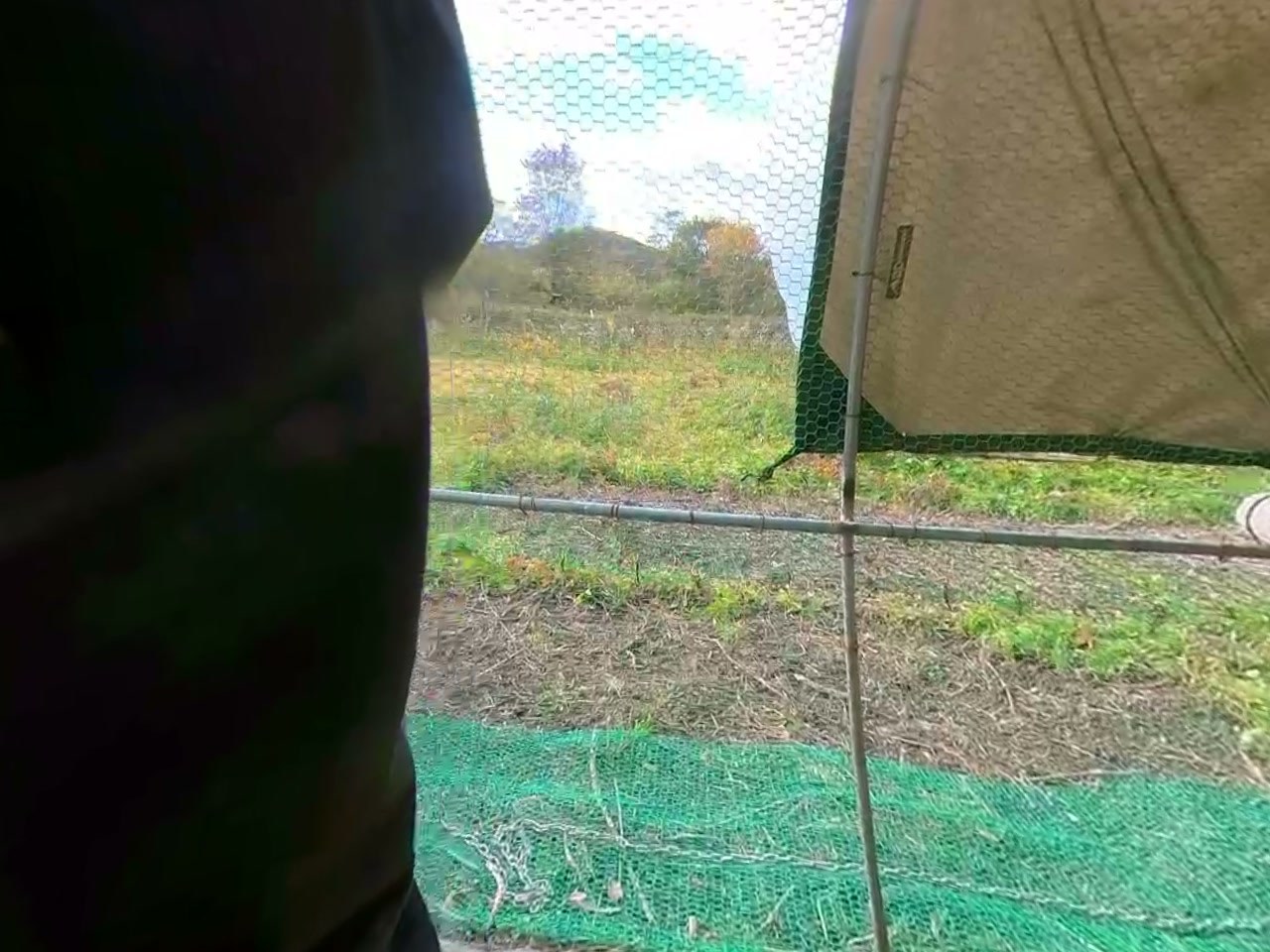
Step 2: Step Down the Two-Hole Wooden Lever Arms, Lock Parallel & Pull Solo
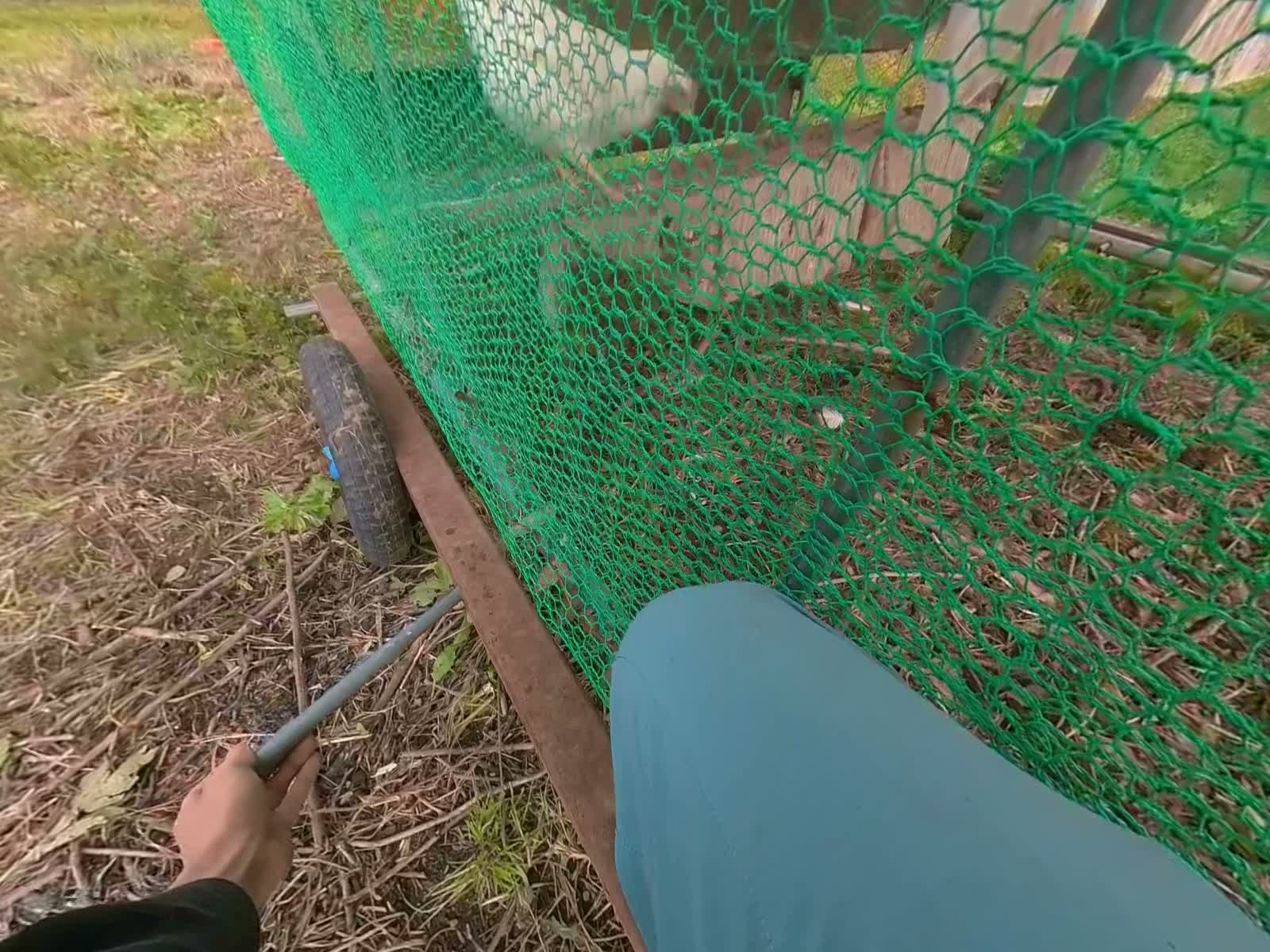
Slip Hole #1 at the tip of each wooden lever arm onto the rear lower side pins (~75° upright), step down on the 1.5 m arm to lever the rear end up ~24 cm (9.5 in),
and the moment the wooden arm sits parallel to the bottom steel rail, slide a 52 cm steel pipe rod through Hole #2 right underneath the bottom rail.
Both wheels stay locked hands-free.
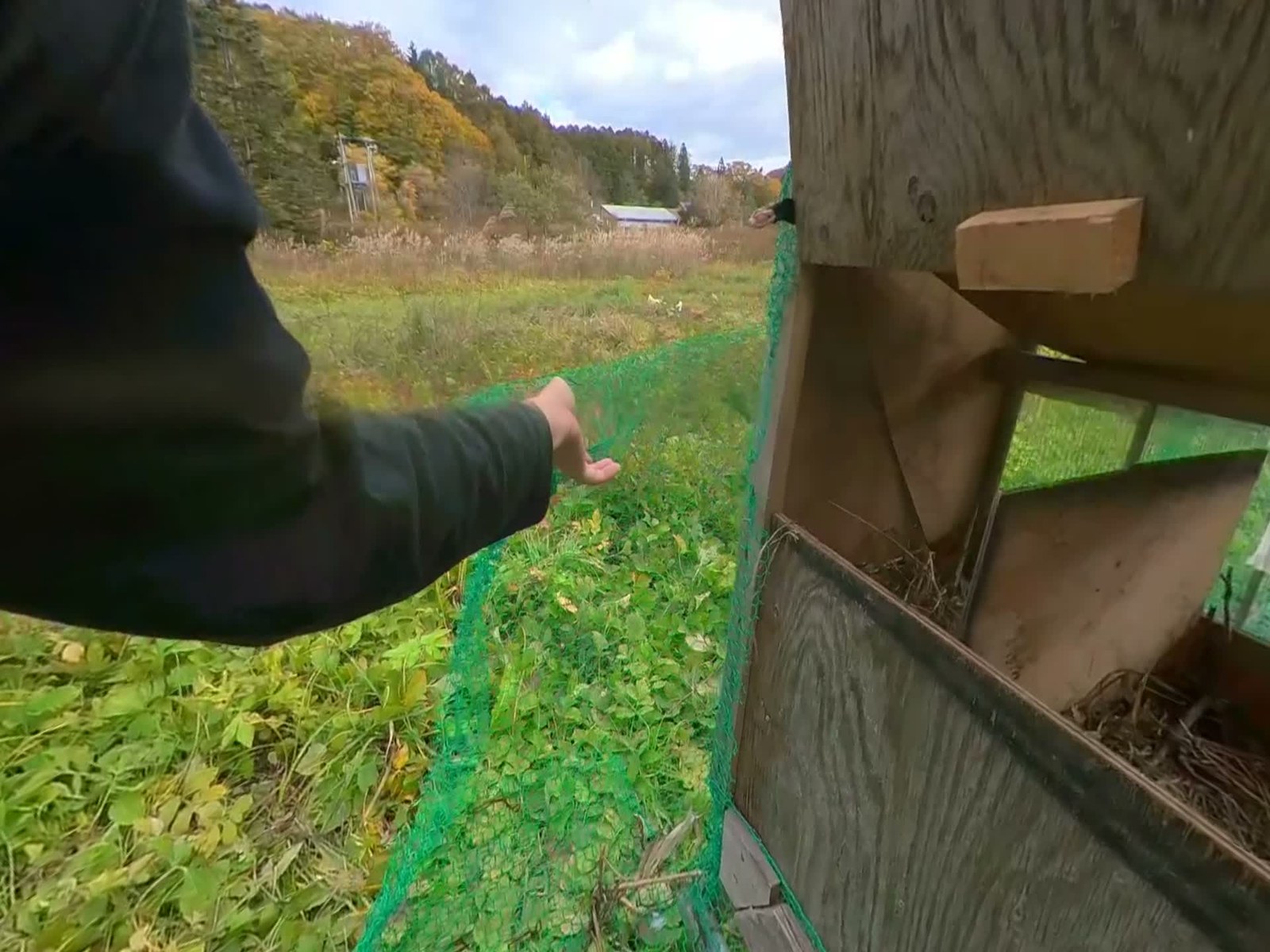
Check the rear egg flaps first, latch them shut, walk to the front tow rope, and pull the entire 30-hen coop one full length forward onto clean green grass by hand.
Step 3: Drop Flush to Sod, Re-Weight the Skirt & Finish Feed + Eggs in Two Trips
Pull the two steel lock rods out and the frame settles flush onto fresh sod with zero predator gap.
Lay both detached lever tires right back onto the rear mesh skirt alongside the iron chains—zero concrete blocks to haul!
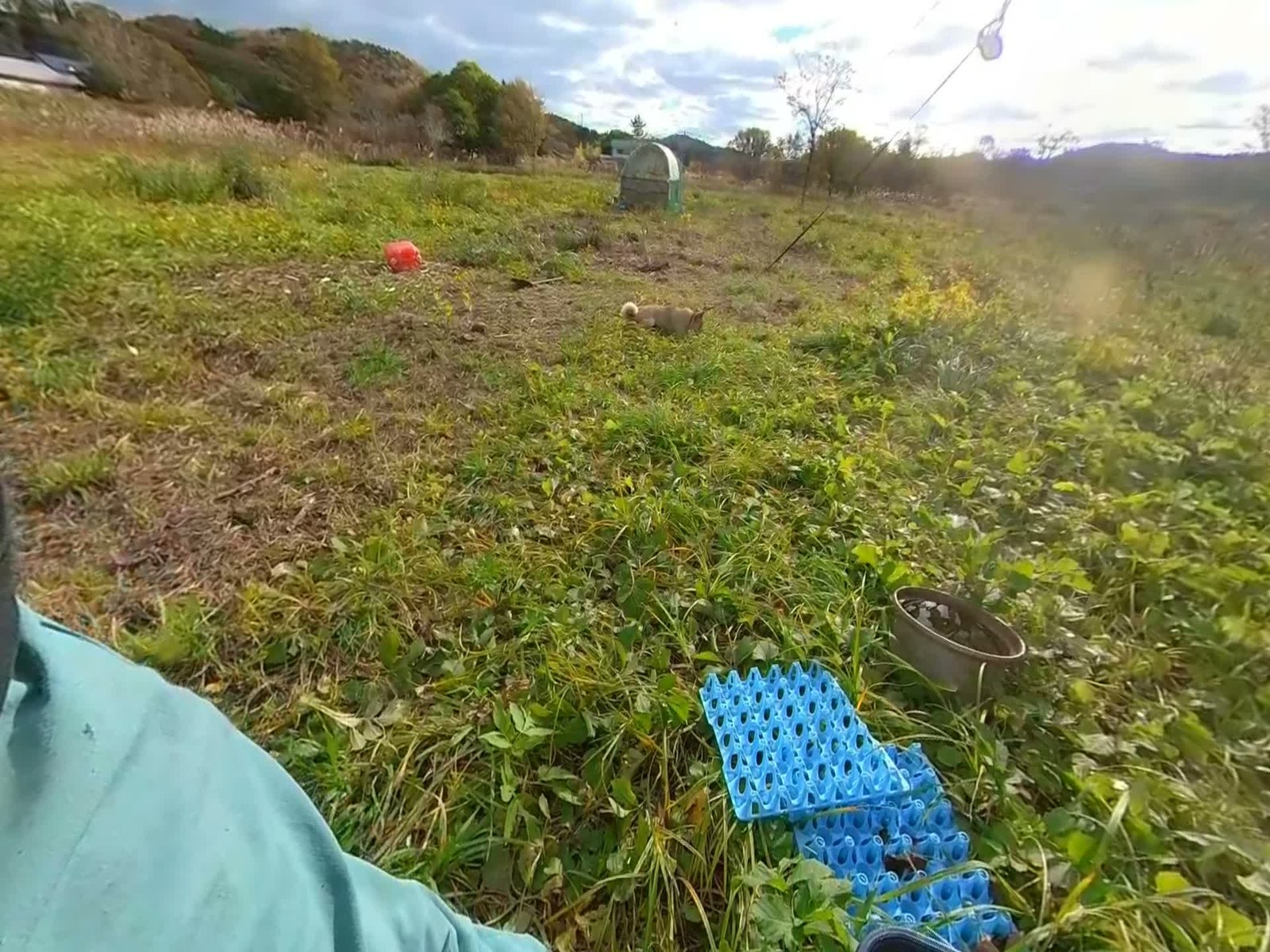
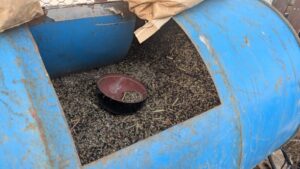
Finally, scoop whole grain in a stainless bowl from the lidded weatherproof bin parked nearby, carry the blue egg flat over in two quick trips,
pop any curious hens that slipped under the raised skirt while
I was standing right there gently back inside the front door, latch the wooden turn-button, and morning chores are done.
5. Frequently Asked Questions
A. Skip heavy 2×4 framing: curved 19–22 mm steel greenhouse pipes + tarp only on the rear upper half + lightweight 16 mm mesh on the front half keep total weight low,
while rear solid wheelbarrow tires on two-hole wooden lever arms carry the heavy nest-box end smoothly over pasture.
A. Pneumatic inner tubes inevitably go flat on rough pasture thorns or UV exposure when sitting detached on the skirt.
Solid polyurethane wheelbarrow tires never puncture and add welcome dead-weight when laid flat on the rear predator apron.
Field-Tested Gear Used in This Log
Disclosure: As an Amazon Associate I earn from qualifying purchases at no extra cost to you.
- Galvanized Greenhouse Hoop Pipes (19mm / 22mm) & Spring Wire Lock Channel — 3/4-inch agricultural steel tubing bent into snow-shedding arches, secured with wiggle-wire lock channel. Field note: Lightweight enough for one-person hand-pulling yet shrugs off coastal wind. Check US specs on Amazon.com (paid link)
Disclosure: As an Amazon Associate I earn from qualifying purchases at no extra cost to you.
- 16mm (5/8-inch) Hexagonal Poultry Wire & Heavy-Duty Predator Apron Mesh — 20-gauge galvanized hex mesh + UV-stabilized predator skirt pinned flat around the coop perimeter. Field note: Stops Ezo red foxes, raccoons, crows, and snakes without burying trench wire. Check US specs on Amazon.com (paid link)
Disclosure: As an Amazon Associate I earn from qualifying purchases at no extra cost to you.
- Flat-Free Solid Polyurethane Wheelbarrow Tires (Pair with Bearings) — Puncture-proof solid foam tires mounted on detachable two-hole wooden lever arms. Field note: Never goes flat on thorns or rough pasture; doubles as skirt ballast weight when detached. Check US specs on Amazon.com (paid link)
If this single-unit hoop-pipe tractor blueprint and two-hole lever-tire rig help your own pastured flock, you can support the flock & Seta on Buy Me a Coffee.



Comments