Disclosure: As an Amazon Associate I earn from qualifying purchases at no extra cost to you.
The longer I live off-grid in Southern Hokkaido—farming without chemical
fertilizers alongside ~50 pastured chickens—the less comfortable I feel buying commercial F1 hybrid seed packets every spring.
Nobody knows how global seed supply chains will shift in the coming years, and buying open-pollinated varieties once so
I can save my own Hokkaido-adapted seed stock closes a vital loop of self-reliance.
This August, carrots I had simply left unharvested inside our unheated hoop house last year overwintered,
bolted into chest-high white umbels, and gave me thousands of mature seeds.
Better yet,
threshing those dry seed heads over a giant camo utility sled turned hundreds of hiding pillbugs into high-calcium chick treats—and storing our paper seed
envelopes inside a dedicated produce-free second refrigerator crisper drawer alongside dry rice keeps germination high for years with zero fussy silica-gel jars.
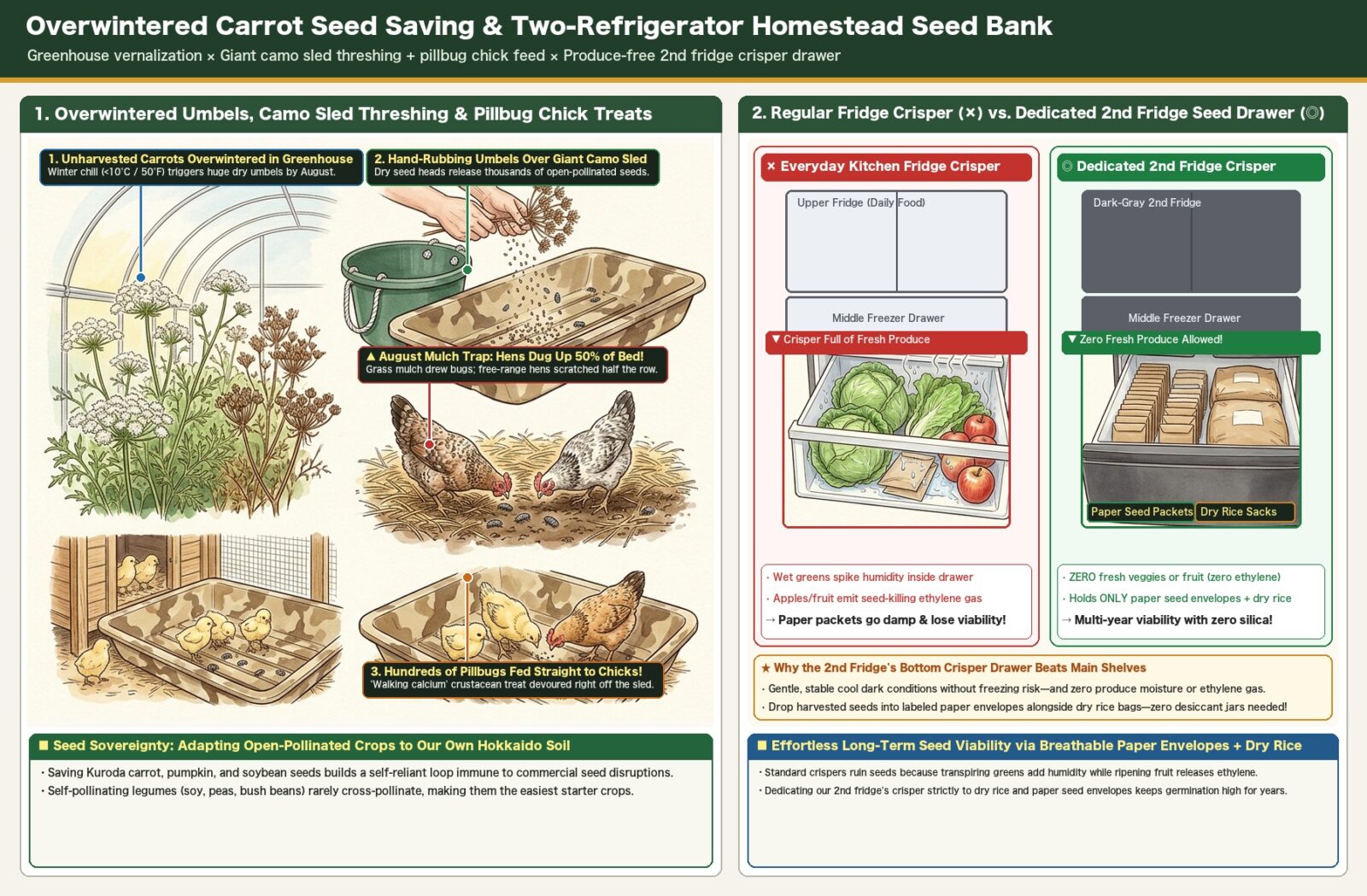
- Greenhouse Vernalization Works Hands-Off: Carrots left in the ground inside an unheated greenhouse survive Hokkaido winter rot-free, hit the <10°C (50°F) vernalization trigger, and set massive dry seed umbels by August.
- Giant Sled Threshing + Pillbug Chick Feed: Rubbing dry umbels by hand over a deep utility sled catches every tiny seed while gathering hundreds of calcium-rich pillbugs to carry straight to the chick pen.
- Produce-Free 2nd Fridge Crisper Drawer: Standard kitchen crispers ruin seeds via wet greens and fruit ethylene gas; dedicating our 2nd fridge’s crisper strictly to paper seed envelopes + dry rice creates an effortless homestead seed bank.
1. Overwintered Greenhouse Carrots, Giant Sled Threshing & “Walking Calcium” for Chicks
I have a confession: I didn’t carefully select and replant stecklings for this carrot seed harvest.
They were simply open-pollinated carrots left unharvested in our greenhouse bed last autumn.
Because carrots are green-plant-vernalized biennials, roots that reach pencil-to-market thickness before experiencing winter chill below 10°C (50°F) initiate flower buds,
bolt tall in spring, and ripen brown seed umbels by August.
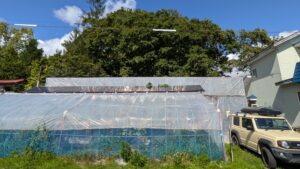
Outdoors under deep Hokkaido snow, overwintered roots sometimes rot—inside the unheated hoop house, they sailed through winter effortlessly.
- Snip Bone-Dry Brown Umbels in August: Wait until the lacy white flower heads curl inward and turn crisp brown.
- Hand-Rub Over a Giant Camo Utility Sled: Rubbing brittle umbels briskly between both palms over a deep polyethylene sled showers thousands of seeds cleanly into the pan without losing a single grain to the wind.
- Deliver Hitchhiking Pillbugs Straight to the Chicks: Dozens—honestly hundreds—of pillbugs (woodlice, terrestrial crustaceans nicknamed “walking calcium” for their calcium-carbonate exoskeletons and protein) were hiding inside the dry flower heads. Carrying the sled straight into the chick pen turned seed cleaning into a feeding frenzy.
2. Sowing Fresh Seed in August Under Grass Mulch—And Losing 50% to Free-Range Hens!
Holding bags of fresh August carrot seed made me wonder: “If nature drops ripe carrot seed right here in August,
shouldn’t sowing immediately follow nature’s clock?” Saving the bulk of the harvest for next year,
I sowed a test bed on the spot and covered the row with cut grass mulch so the tiny surface-sown seeds wouldn’t dry out.
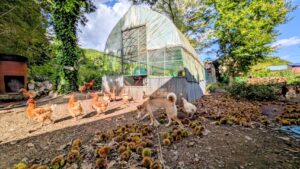
Germination was fantastic—until my free-range flock discovered the bed.

 けっち
Watching closely proved hens don’t care about eating tender carrot tops—the damp grass mulch I laid down for germination attracted pillbugs,
and the flock scratched out 50% of the seedlings hunting bugs!
Ironically, once autumn fox/predator sightings spooked the hens into staying inside their coop, the surviving 50% grew lush and undisturbed.
3. Why Our Two-Refrigerator “Produce-Free Crisper” Makes Seed Storage Foolproof
Alongside carrots, I save open-pollinated pumpkin and soybean seeds—with peas, bush beans, and cucumbers next on the list (note for beginners:
legumes like soybeans, peas, and bush beans self-pollinate inside closed petals before opening, making accidental cross-pollination rare and seed saving nearly foolproof).
Every harvest goes straight into breathable paper envelopes inside a refrigerator crisper drawer.
Gardeners often warn: “Never put paper seed packets in a fridge vegetable drawer—humidity and
fruit gas will kill germination!” That’s 100% true in a single-fridge kitchen, which is why our two-refrigerator setup changes the game completely:
| Storage Zone | What Goes Inside | Seed Viability & Horticultural Physics |
|---|---|---|
| Regular Kitchen Fridge Crisper (× Bad for Paper Packets) | Fresh leafy greens, apples, tomatoes + seeds | Transpiring produce spikes relative humidity, while ripening fruit emits ethylene gas that accelerates seed aging and ruins germination. |
| Our 2nd Fridge Dedicated Crisper (◎ Ideal Seed Bank) | Paper seed envelopes + dry milled/brown rice sacks ONLY (zero fresh produce!) | Zero wet produce means zero ethylene gas and zero moisture spikes. Dry rice buffers gentle cool darkness—preserving multi-year germination with zero sealed jars or desiccant swaps. |
4. Frequently Asked Questions
A. F1 hybrids segregate unpredictably in the second generation (and wild Queen Anne’s lace nearby can cross with blooming carrots).
Start with a proven open-pollinated / heirloom cultivar like Kuroda or Chantenay 5-inch carrots so saved seeds stay true to root quality.
A. If your crisper holds fresh vegetables and fruit, never leave bare paper seed packets exposed inside it.
Dry seeds thoroughly first, seal paper packets inside an airtight glass mason jar or gasketed bin with a silica-gel packet, and store on a main refrigerator shelf.
Field-Tested Gear Used in This Log
Disclosure: As an Amazon Associate I earn from qualifying purchases at no extra cost to you.
- Open-Pollinated / Heirloom Carrot Seeds (Kuroda / Chantenay 5-Inch Type) — Non-hybrid open-pollinated carrot cultivar capable of true-to-type biennial seed saving. Field note: Buy once, overwinter roots in an unheated hoop house, and harvest thousands of free seeds. Check US specs on Amazon.com (paid link)
Disclosure: As an Amazon Associate I earn from qualifying purchases at no extra cost to you.
- Heavy-Duty Camo Utility Jet Sled (Large Deep-Pan Hauler) — High-density polyethylene winter/farm utility sled for hauling firewood, snow, and threshing dry seed umbels. Field note: Doubles as a giant wind-proof threshing tub when crushing dried carrot seed heads. Check US specs on Amazon.com (paid link)
Disclosure: As an Amazon Associate I earn from qualifying purchases at no extra cost to you.
- Digital Automatic-Turning Egg Incubator — Forced-air digital temperature control with automatic egg turner for 21-day natural flock replacement. Field note: Lets us hatch fertilized eggs from our hardy survivor hens at zero chick cost. Check US specs on Amazon.com (paid link)
If this lazy hoop-house seed-saving loop sparks ideas for your own garden resilience, you can support the flock & Seta on Buy Me a Coffee.

Comments