
*This article contains affiliate links (PR and Amazon Associates). All recommended gear is based on my firsthand testing and daily use on my homestead in Southern Hokkaido.
Spring and autumn in Southern Hokkaido are incredible seasons when the mountains overflow with wild plants like alpine leeks (gyojanniku), bracken fern (warabi), udo, and butterbur, alongside autumn slippery jack mushrooms (rakuyo kinoko).
However, stepping into dense bamboo grass with thin shoes can easily lead to slips on steep slopes, and returning home often reveals ticks clinging to my companion dog’s fur or my clothes. Foraging brings real risks regarding footing and insect safety.
Furthermore, preservation methods presented early challenges: attempting to remove harshness from bracken using baking soda caused pectin breakdown (beta-elimination) that turned the stems into mush, and overly complex soy sauce marinades diluted the natural flavors.
This article compiles the 6 practical tools I rely on for foraging and safe preservation—focused on my lightweight style accompanied by my dog Seta, along with recommended gear for solo foragers—alongside foolproof processing techniques.
Here is a list of the equipment and materials I have personally purchased and currently use on my homestead in Southern Hokkaido.
Use the links on the right to jump directly to the price comparison sections for Amazon, Rakuten, and Yahoo!
| Equipment / Material | My Homestead Application & Selection Points | Price & Stock |
|---|---|---|
| O’TOM Tick Twister Original (Large & Small 2-Piece Set) | Hook slipped between skin and tick to safely extract the mouthparts with 2-3 twists (kept in hallway and vehicle) | See US Gear Box below |
| Wild Bird Society of Japan Bird Watching Rain Boots (Brown, 3L/28cm, sized up) | I use 3L (28cm). Ankle-hugging fit for steep slopes; after wearing out, repurposed into garden slippers | See US Gear Box below |
| Kodama Brothers Power Forest Incense (Red Box, 30 coils) & Portable Burner Set | Recommended for readers spending long hours near damp ravines before summer. Stronger smoke and active ingredients than standard mosquito coils | See US Gear Box below |
| Boil-Sterilizable Glass Storage Jar (For Long-Term Soy Sauce Marinated Alpine Leeks) | Dedicated to raw soy sauce-only marinating of alpine leeks. Glass prevents odor absorption and allows nearly 1 year of refrigerated aging | See US Gear Box below |
| Shin-Kasei (TONBO) Pickles Press Square K-40 (4.1L) | Salts down bracken without dissolving it in baking soda, using coarse salt and screw-down pressure plates for crisp texture | See US Gear Box below |
| SABRE Frontiersman Max Bear Spray 234mL | Recommended alongside advance checks and voice calls for solo foragers entering the mountains without a dog | See US Gear Box below |
Generally, casual sneakers or cheap work boots from hardware stores are used, and harvested bracken is quickly boiled with baking soda for immediate consumption—which is easy and foolproof.
Additionally, full defensive gear like bear spray and thick insect coils is recommended for anyone entering deep ravines alone.
Even so, I keep ankle-fitting Wild Bird Society boots (3L/28cm) and a rotary tick remover on hand, keeping my mountain walks light and agile accompanied by my Jomon Shiba dog Seta (while listing forest incense and bear spray as recommended options for solo hikers without dogs).
Furthermore, for preservation, I skipped error-prone baking soda boiling in favor of “salting (using the Pikuru K-40)” and “raw water wash plus soy-only marinating,” adopting a practical workflow that maintains a crisp texture until the following year.
Utilizing 4 Spring Wild Plants & Autumn Mushrooms with Foolproof Preservation Rules
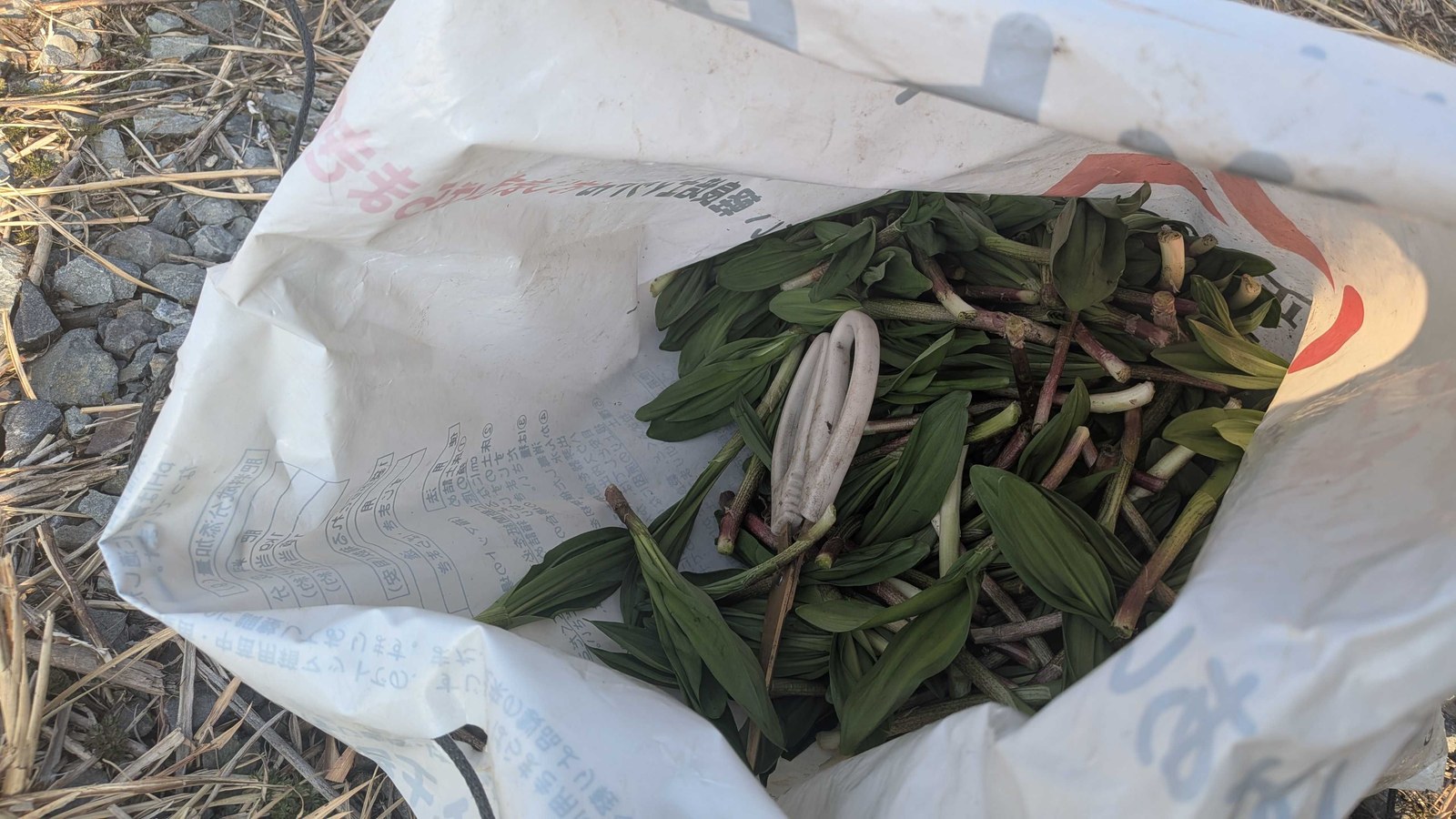
The main staples I gather in spring around the mountains, homestead perimeter, and permitted areas are alpine leeks, bracken, udo, and butterbur, alongside slippery jack mushrooms in autumn.
For all of these ingredients, long-term preservation using only simple salt or soy sauce yields far better and safer results than over-processing.
| Seasonal Mountain Bounty | Field Prepping & Consumption Methods | Important Rules & Cautions to Prevent Failure |
|---|---|---|
| Alpine Leeks (Spring) | Without blanching or boiling, wash cleanly in raw water, dry well, and pack into sealed jars with pure soy sauce only | Applying heat destroys the pungent flavor and aroma, so raw marinating is best. Strictly off-limits for my dog Seta due to allium poisoning risks |
| Bracken (Spring) | For large harvests, avoid baking soda and use a Pikuru K-40 for long-term “salt pickling” | Baking soda boiling causes stem breakdown via pectin beta-elimination, so salt pickling—desalted before eating—is stable |
| Udo (Spring to Early Summer) | Roots = miso pickle, stems = vinegared miso salad, leaves = oil stir-fry, buds = tempura (utilizing all 4 parts) | A zero-waste ingredient yielding 4 dishes from a single stalk. Mountain udo without soil mounding has an intense aroma |
| Butterbur (Spring to Early Summer) | Rubbed with salt, blanched, peeled, and preserved as salt pickles, soy-simmered dishes, or stir-fries | Thoroughly remove fibers from thick stalks, desalt, and simmer with chicken stock for an exquisite dish |
| Slippery Jack Mushrooms (Autumn) | Brush off dirt and leaves, soak in saltwater to purge insects, blanch, and use in grated daikon radish salads or miso soup | Confirm characteristics (like yellow tube pores underneath) to prevent toxic lookalikes; thorough saltwater purging and heating are mandatory |
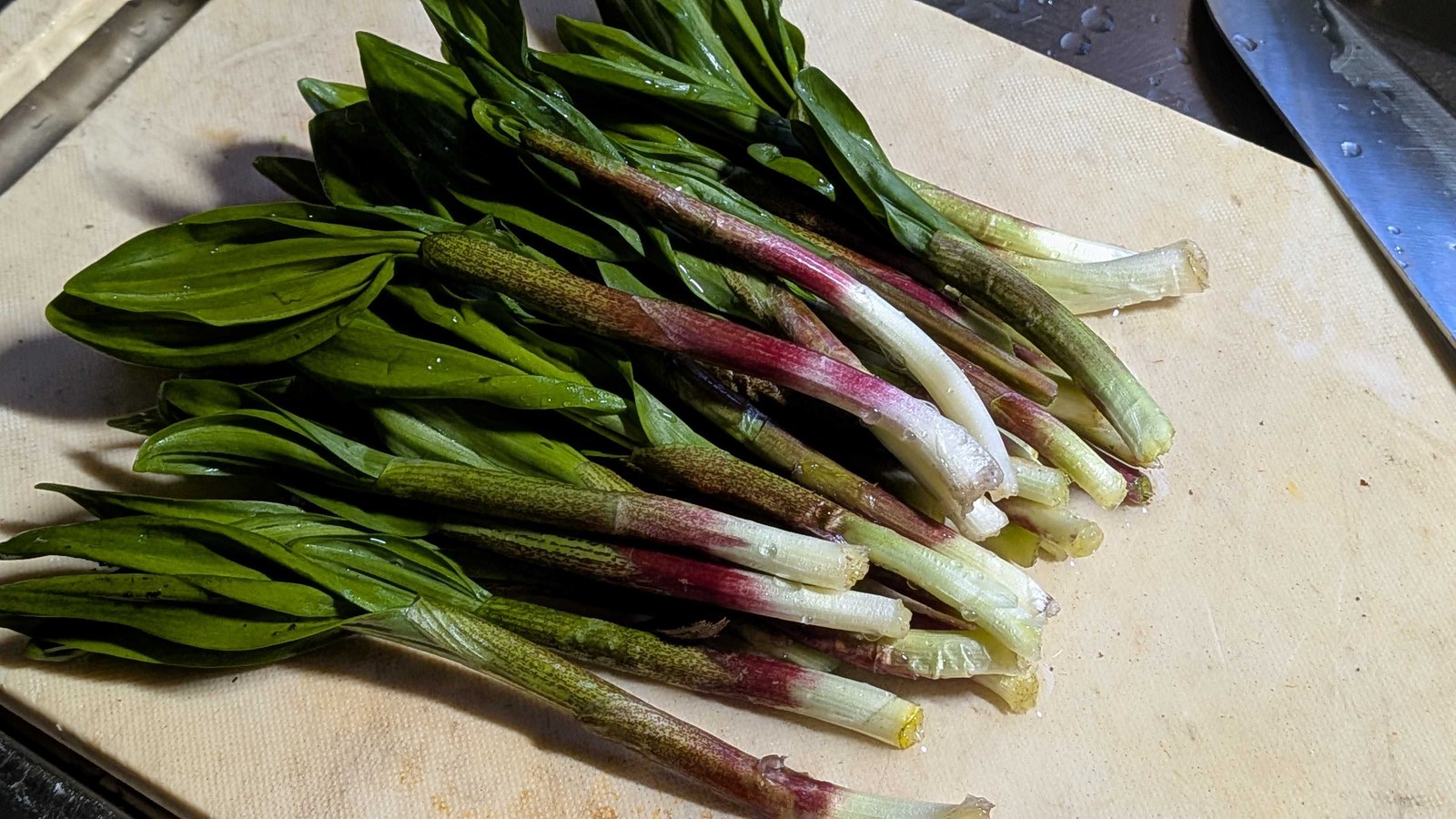
Accidental poisoning from wild plants and toxic mushrooms occurs nationwide every year. Official guidance from the Ministry of Health, Labour and Welfare (concerning toxic plant food poisoning and misidentification of alpine leeks with autumn crocus or lily of the valley) and Hokkaido Prefecture food safety notices emphasize the importance of correct identification.
In particular, to spot toxic lookalikes like lily of the valley or false hellebore growing alongside alpine leeks, checking leaf veins and the distinct garlic aroma for every single plant in the field is an ironclad rule.

Checking every plant in the field is crucial! Never let dogs near alpine leeks!
6 Essential Tools for Mountain Terrain, Ticks, Bracken Salting, and Solo Safety
I have organized 6 helpful tools for mountain walking and processing mountain harvests: rotary tick removers, ankle-fitting boots, raw soy sauce storage jars, bracken salt presses, and recommended defensive gear for readers who enter the mountains without a dog.
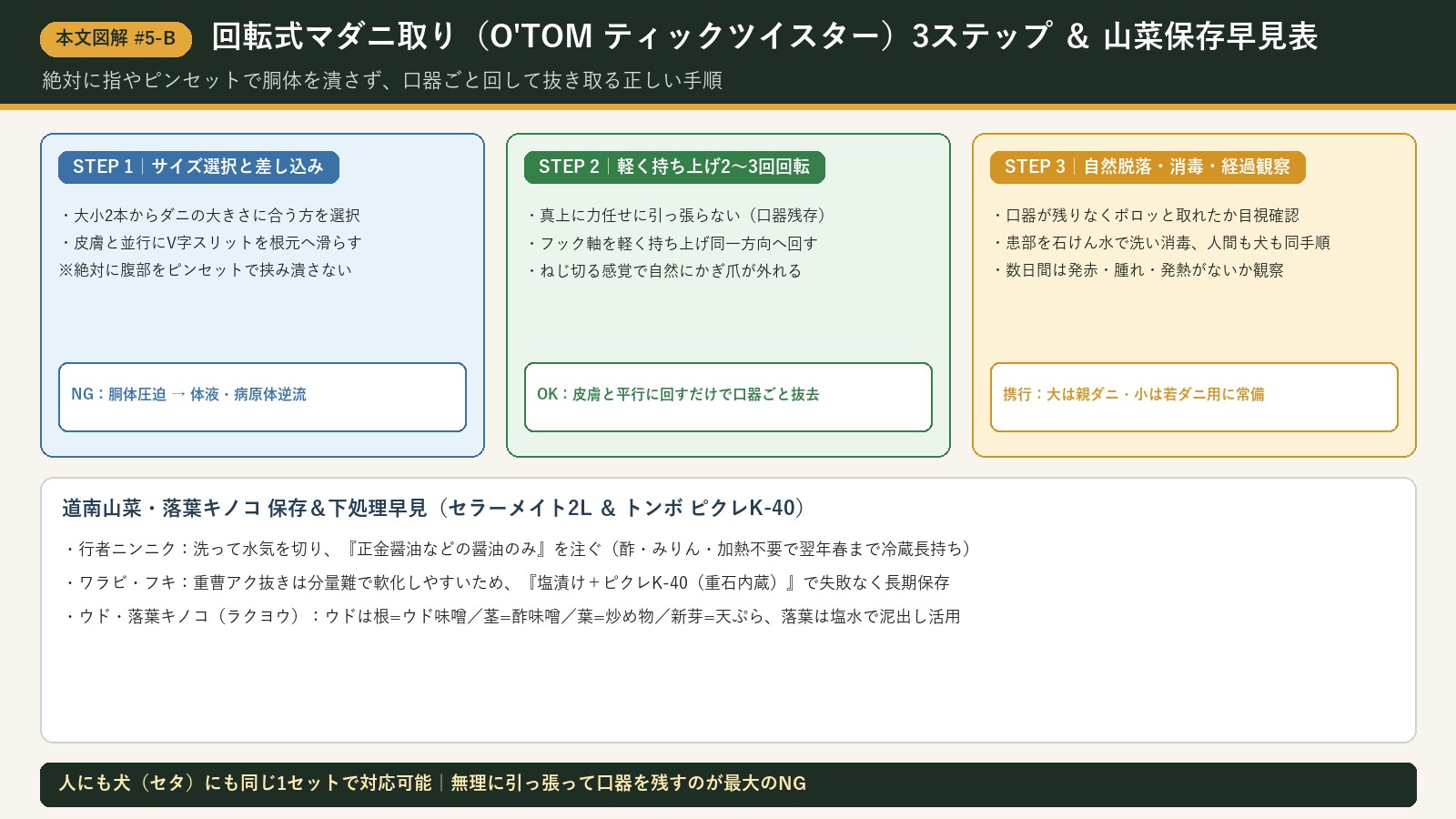
1. O’TOM Tick Twister (Rotary Tick Remover, Large & Small 2-Piece Set)
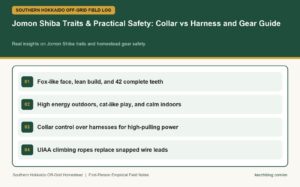
Because my Jomon Shiba dog Seta always joins me on mountain walks, ticks inevitably latch onto her fur or my shins when we return from the brush.
As warned by health authorities, crushing ticks with fingers or tweezers or pulling them straight can cause pathogens to regurgitate or snap the mouthparts off inside the skin. That is why I keep Tick Twisters—which slip between the skin and hook to rotate 2 to 3 times for a clean removal—stored in both the entryway and my car.
2. Wild Bird Society of Japan Bird Watching Rain Boots (3L/28cm, Cut-Ankle Secondary Use)
Standard stiff rubber boots flop around the ankles, making sprains likely on steep slopes, and their weight exhausts your calves after half a day of walking.
I rely on the 3L (28cm) size; their snug ankle fit offers a totally different level of comfort on steep streams and bamboo thickets. Furthermore, even after punctures from thorns reduce their waterproofing, I don’t discard them—I trim the tops down to ankle height with scissors and wear them out as garden or chicken coop slippers.
Disclosure: As an Amazon Associate I earn from qualifying purchases at no extra cost to you.
- Packable Natural-Rubber Field Boots (Wild Bird Society of Japan / Roll-Up Style) — Supple ankle-hugging natural rubber with drawcord cuff; zero mud-suction pull-off, folds flat, DIY slipper afterlife. Field note: Japan-market WBSJ model worn daily; size up +1 and add thick insoles to cure thin-sole fatigue. Check US specs on Amazon.com (paid link)
3. Kodama Brothers Power Forest Incense (30 Coils) & Portable Burner (Recommended for Solo/Deep Ravine Hikers)
Hokkaido mountains swarm with blackflies and mosquitoes right after the snow melts. While I usually make quick, lightweight trips with Seta, readers spending extended hours near damp ravines should carry Red Box Power Forest Incense—which produces heavier smoke and stronger active ingredients than standard mosquito coils—paired with a wearable portable burner as standard defensive gear.
4. Cellemate Airtight Glass Jar with Handle 2L (Dedicated for Raw Soy Sauce Marinating)
When washing freshly harvested alpine leeks without boiling and marinating them in raw soy sauce only, plastic containers absorb pungent garlic odors that never wash out.
The Cellemate 2L jar features glass construction, easily disassemblable silicone gaskets, and a carrying handle, allowing nearly a year of refrigerator aging without any odor retention and long-lasting cleanliness.
Disclosure: As an Amazon Associate I earn from qualifying purchases at no extra cost to you.
- Heat-Resistant Wide-Mouth Glass Canning Jars (Boiling-Water Safe) — Thick borosilicate/soda-lime wide-mouth glass jars sterilized in a pot atop the wood stove. Field note: Used for raw soy-sauce pickled Hokkaido wild garlic (Gyoja-ninniku) that keeps over a year refrigerated. Check US specs on Amazon.com (paid link)
5. Shin-Kasei (TONBO) Pickles Press Square Pikuru K-40 (4.1L, Dedicated for Bracken Salting)
When salting down large harvests of spring bracken all at once, a dedicated pickle press like the Tonbo Pikuru Square K-40 (4.1L) is invaluable because it fits neatly into square refrigerator space and applies even pressure via a screw-down plate.
Boiling bracken with baking soda often results in stems dissolving into mush from pectin beta-elimination, but salting them under proper pressure with coarse salt preserves their crisp texture until the following year.
6. SABRE Frontiersman Bear Spray (Recommended Option for Solo Foragers)
As indicated in Hokkaido Prefecture’s official brown bear safety information, ravines and low-visibility brush abounding in wild vegetables and mushrooms overlap with brown bear habitats.
I walk light with my Jomon Shiba dog Seta, letting her detect surrounding sounds and scents, but for anyone entering the mountains alone without a dog, carrying a reliable bear spray alongside checking recent sighting reports, wearing bear bells, and making your voice heard is strongly recommended.
Frequently Asked Questions (Wild Vegetable Preservation, Ticks, and Dog Companions)
Q: Why don’t you blanch or add mirin and dashi to soy-marinated alpine leeks?
Blanching (boiling) strips away the wild aroma and sharp spice, while sugars and moisture from mirin or dashi reduce shelf life.
Washing them cleanly raw, drying thoroughly, and pouring pure soy sauce (such as Shoskin Shoyu) over them yields a tight, versatile flavor lasting all year.
Q: Isn’t desalting salt-pickled bracken difficult?
It avoids the major failure of baking soda methods where misjudged boiling times turn everything into mush.
Using a press container like the Pikuru K-40 with coarse salt and pressure allows spring bracken to be eaten even in winter; you simply soak your desired portion in water overnight and give it a quick blanch, making it extremely reliable.
Q: Are Wild Bird Society boots finished once punctured in the brush?
Because they are made of soft rubber, walking into thorny briars will inevitably cause punctures. However, after patching and wearing them out, I don’t discard them—I cut them cleanly around the ankle line with scissors and repurpose them into poultry coop slippers, enjoying a two-stage lifecycle.
Conclusion: Simple Tools and Processing Turn Mountain Bounties Into a Year of Food
Hokkaido’s nature has harsh aspects, but by mastering proper footing, tick removal, and basic salt/raw soy preservation, a small amount of labor in spring and autumn enriches your dining table for an entire year.
A list of other living and DIY tools I use on site is gathered in my Hokkaido Homestead Gear Catalog, and details on my lifestyle design and self-sufficiency results in Southern Hokkaido are available in my Annual Expense 500,000 Yen Northern Income White Paper.
This is the final checklist of equipment and materials used in this article.
Each link takes you back to the Amazon, Rakuten, and Yahoo comparison buttons within the article.
- O’TOM Tick Twister Original (Large & Small 2-Piece Set): See US Gear Box below
- Wild Bird Society of Japan Bird Watching Rain Boots (Brown, 3L/28cm, sized up): See US Gear Box below
- Kodama Brothers Power Forest Incense (Red Box, 30 Coils) & Portable Burner Set: See US Gear Box below
- Boil-Sterilizable Glass Storage Jar (For Long-Term Soy Sauce Marinated Alpine Leeks): See US Gear Box below
- Shin-Kasei (TONBO) Pickles Press Square Pikuru K-40 (4.1L): See US Gear Box below
- SABRE Frontiersman Max Bear Spray 234mL: See US Gear Box below
Active gear across all categories is also organized in my Southern Hokkaido Homestead Gear Summary.
If these raw Southern Hokkaido field logs are useful for your own off-grid homestead, you can also support Seta & the flock on Buy Me a Coffee.




Comments