
Disclaimer: This article contains affiliate promotions.
I am Kecchi, running a free-range flock of 50 chickens at my homestead in Southern Hokkaido, where winter temperatures regularly range between -3°C to -8°C (18-27°F). As my flock grew, the most exhausting daily chores became watering, cleaning waterers, and fighting winter freezes. Commercial bucket and nipple waterers brought nothing but frustration: they got dirty immediately, valves clogged causing muddy floors, and freezing temperatures cracked them instantly.
Here is the list of equipment and parts I purchased with my own money and currently operate at my Southern Hokkaido site. Use the links on the right to jump directly to the 3-shop price comparison frames (Amazon, Rakuten, Yahoo!) within this article.
| Equipment / Materials | My On-Site Use & Selection Points | Price & Stock |
|---|---|---|
| Makita Cordless Split-Shaft Grass Trimmer 36V (18V x 2) MUX60DZ (Split Shaft, Rear Motor Body Only) | Power base for regularly stirring deep litter inside the coop. Attach a cultivator to till the entire floor in 10 minutes. | See US Gear Box below |
| Makita Cultivator Attachment KR401MP (A-67309) | 36V tillage attachment paired with PVC auto-watering to keep coop flooring fluffy alongside earthworm breeding. | See US Gear Box below |
- Zero Water Dirt & Float-Controlled Exterior Watering: Using thick PVC pipes (like VU65) with large round holes spaced roughly 1 meter apart, combined with a compact float valve for automatic water level control and an external hose/tub setup, completes watering from outside without overflows.
- 10-Second Cleaning & Zero Winter Breakage: Resting the pipe on blocks instead of fixing it to walls allows complete drainage simply by removing the detachable rear-left cap. In dead winter, leave it drained and buried in snow; chickens hydrate by pecking fresh snow.
- Natural Earthworm Farming Under Blocks & 10-Minute Cultivator Tills: Minor water leaks and heavy blocks create an earthworm breeding shelter, which—combined with floor stirring using the Makita Cultivator (KR401MP)—completes a fermentation circulation cycle.
 けっち
Bucket-style waterers get dirty instantly, and nipple waterers catch debris, leak, or freeze in winter. Switching to a simple structure with round holes on top of a PVC pipe made cleaning, watering, and winterizing dramatically easier.
1. Why the Top-Hole PVC Pipe System Over Nipples or Buckets?
To put it simply, rather than nipple systems with tiny pin valves that clog immediately, a design featuring large round holes spaced about 1 meter apart on top of thick PVC pipes, maintaining constant water levels inside via a compact float valve, clogs the least, stays cleanest, and lets chickens drink instinctively from day one.
| Watering Method | Field Disadvantages & Issues | Solutions with Top-Hole PVC Pipe |
|---|---|---|
| Commercial Bucket / Dish Waterers | Chickens step on them to poop, and massive amounts of chaff from dust-bathing get inside, rotting unless washed daily. | Simply drill large round holes on top of thick PVC pipes spaced roughly 1 meter apart so heads and beaks fit, keeping feet, chaff, and droppings out. |
| Nipple Style (Peck Type) | Fine debris jams the valve, causing leaks that turn floors into mud. Tips freeze instantly in winter, and birds require training. | A compact float valve maintains a steady water level visible to birds so they drink immediately without clogging like tiny nipple valves. |
| Carrying Water Inside the Coop | Carrying heavy buckets into the coop daily lets chickens escape through doors and dirties boots. | Connected to an external tub and hose with float valves stopping water automatically, eliminating overflow and completing watering from outside. |
- Top Hole Machining (Approx. 1-Meter Spacing, Large Round Holes): Drill comfortably sized round holes (about 5-6 cm in diameter) spaced roughly 1 meter apart on top of thick PVC pipes (such as VU65) so chickens can comfortably insert their heads and beaks. This provides an ideal balance where birds won’t collide with neighbors while preventing feet and droppings from entering.
- Automatic Water Level Control via Compact Float Valve & External Hose/Tub Supply: Directly connecting a hose from an elevated tub would overflow all top holes, so I combine a toilet-tank-principle mini float valve (auto-shutoff float) with a threaded watering nozzle. When water inside the PVC pipe reaches a specific height, the float rises to stop water automatically; as chickens drink and the level drops, water replenishes automatically from the outside tub and hose.
- Variable “Block-Resting” Structure Without Wall Fastening: Resting pipes on concrete blocks makes it easy to adjust drinking height within a minute when adding chaff changes floor height, and lets you quickly move them during floor tillage.
2. Cleaning Takes 10 Seconds via Rear Cap, Winterizing Involves Draining and Snow Burial
- 10-Second Drainage via End Knob Cleaning Port (Detachable Cap): Using a VU PVC cap on one end and a VP/VU knob-style cleaning port (or unglued detachable cap) on the drainage side lets you remove the lid and lift the front to drain and wash everything in 10 seconds.
- Deep Winter Snow Burial With Drained Pipes: When sub-freezing temperatures arrive (measured around -3°C to -8°C / 18-27°F in Southern Hokkaido), remove the caps, drain the water, and leave pipes buried in snow. As long as water is drained, PVC pipes never crack, and winter chickens peck drifting fresh snow for hydration.
- Dripping Leaks Under Blocks Create a Natural Earthworm Shelter: Loose joints that drip slightly under blocks create an environment with moderate moisture and a sanctuary out of beak reach. Moving blocks occasionally reveals massive populations of earthworms that my 50 chickens mob with extreme excitement.
3. Finish in 10 Minutes With Makita’s Cultivator (KR401MP): 5 Floor Tillage Benefits
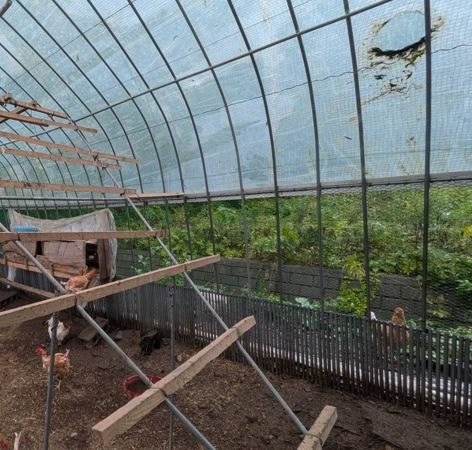
Attaching the cultivator attachment Cultivator (KR401MP / A-67309) to the Makita 36V split-shaft grass trimmer and tilling the coop floor (chaff and chicken manure) for just 10 minutes accomplishes five major benefits simultaneously.
- Chicken manure dispersion under roosts and aerobic fermentation (zero ammonia odor)
- Pre-blending of crumbly, aged compost ready for immediate garden application
- Chicken foot care (bumblefoot prevention) via fluffy cushion maintenance
- Regeneration of dust-bathing environments for natural mite and lice removal
- Excavation of deep-dwelling earthworms and insects (chicken treat time)
4. Frequently Asked Questions & Summary
Q: Won’t chickens lack water if I drain the watering pipes and leave them in winter?
A: Because Hokkaido winters feature constant snow around the coop, chickens peck drifting fresh snow or granular snow to hydrate themselves. This is much healthier and safer than carrying hot water daily and managing freezing water dishes that risk frostbite injuries.
Q: Do you use commercial automatic coop doors (like optical sensor models)?
A: I previously purchased a waterproof aluminum automatic chicken coop door on Amazon, but after receiving a defective item with different internal parts, I stopped using it. Due to winter freezing and malfunction risks, I now rely on a secure narrow crawl door keeping crows out alongside simple manual management.
[Today’s Self-Sufficiency Know-How: PVC Top-Hole Waterer & Coop Ecosystem]
– Achieves zero overflow, clean water, and exterior coop watering using round holes spaced 1 meter apart on thick PVC pipes with compact float valve level control.
– Simplifies cleaning to 10 seconds with unfastened block resting and detachable rear caps, while winter drainage ensures zero damage.
– Maintains odorless fermented litter through natural earthworm breeding beneath blocks and 10-minute tilling with the Makita Cultivator (KR401MP).
Behind the idyllic phrase of “0 yen feed bills and year-round egg feasts” lies the realistic wall of quantity and nutrition you only discover after raising 50 birds. I publish my 0-yen spring/summer and 5,000-yen autumn/winter circular cycle alongside management standards learned from losing about 30 chicks on Note.
- The reality that 30kg of gifted broken rice is insufficient, and the true balance of 0 yen in spring/summer / 5,000 yen monthly purchases in autumn/winter
- Calcium circulation via “water-soaked feeding” of substandard soybeans plus “egg shells, wood-stove ash, and summer insects”
- Two-sided open pipe coop, VU65 watering x winter snow, and animal hygiene management standards mandatory even for flocks under 100 birds
Final checklist of equipment and materials used in this article.
Each link returns you to the Amazon, Rakuten, and Yahoo comparison buttons inside the article.
- Makita Cordless Split-Shaft Grass Trimmer 36V (18V x 2) MUX60DZ (Split Shaft, Rear Motor Body Only): See US Gear Box below
- Makita Cultivator Attachment KR401MP (A-67309): See US Gear Box below
All active gear across categories is also organized in my Southern Hokkaido Self-Sufficiency Life Favorite Gear & Materials Summary Catalog.
If these raw Southern Hokkaido field logs are useful for your own off-grid homestead, you can also support Seta & the flock on Buy Me a Coffee.







Comments