
Disclosure: As an Amazon Associate I earn from qualifying purchases at no extra cost to you.
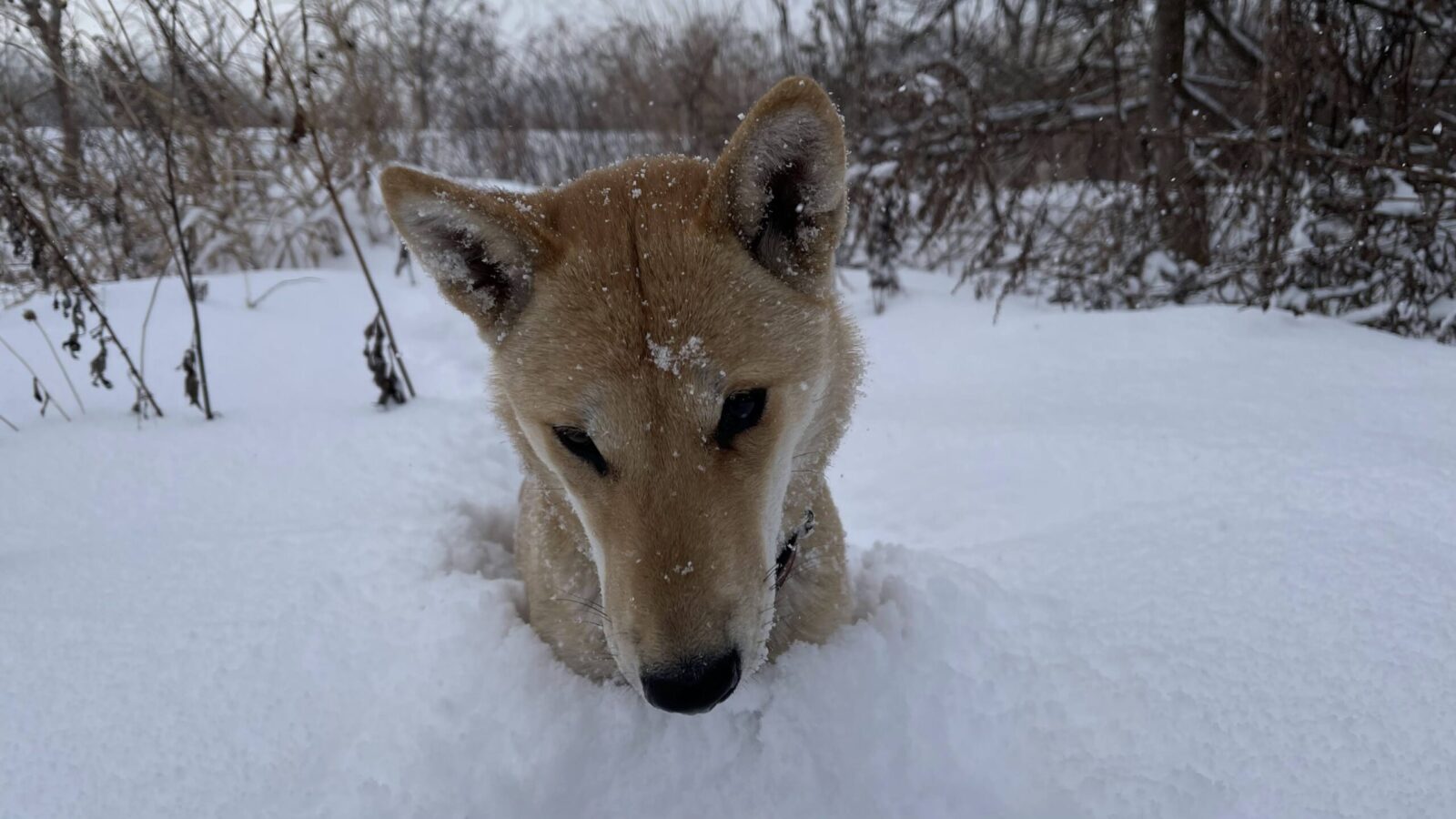
Living in the mountains of Southern Hokkaido with ~50 pastured chickens and my primitive guardian dog, Seta (a Jomon Shiba), brings up a classic homestead dilemma:
chaining a high-drive dog to a short post is miserable, letting him roam completely unfenced risks getting hit on the front road,
and building an outdoor doghouse means shoveling buried kennels and trudging through winter blizzards twice a day with food bowls.
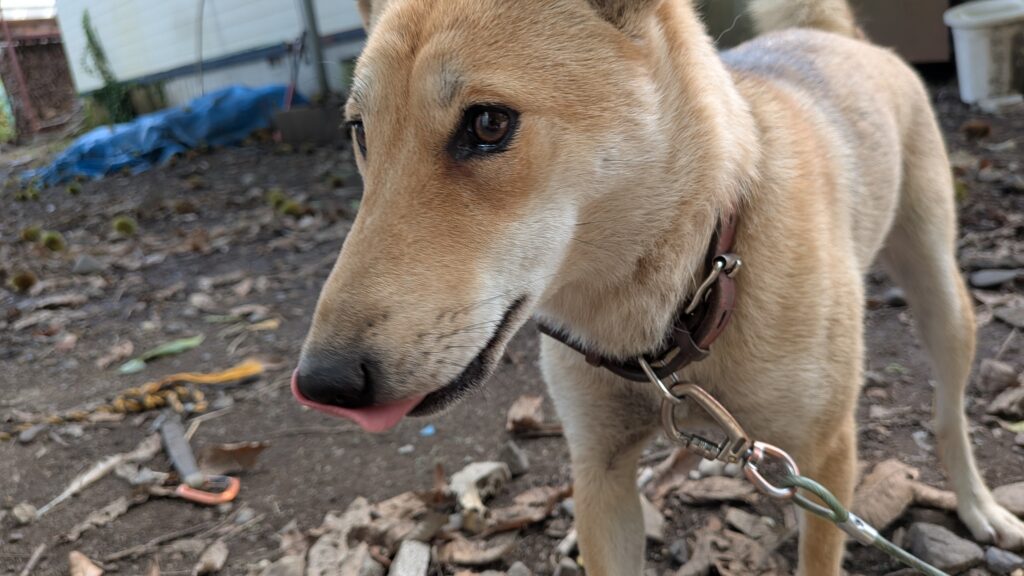
My solution eliminates the outdoor doghouse entirely:
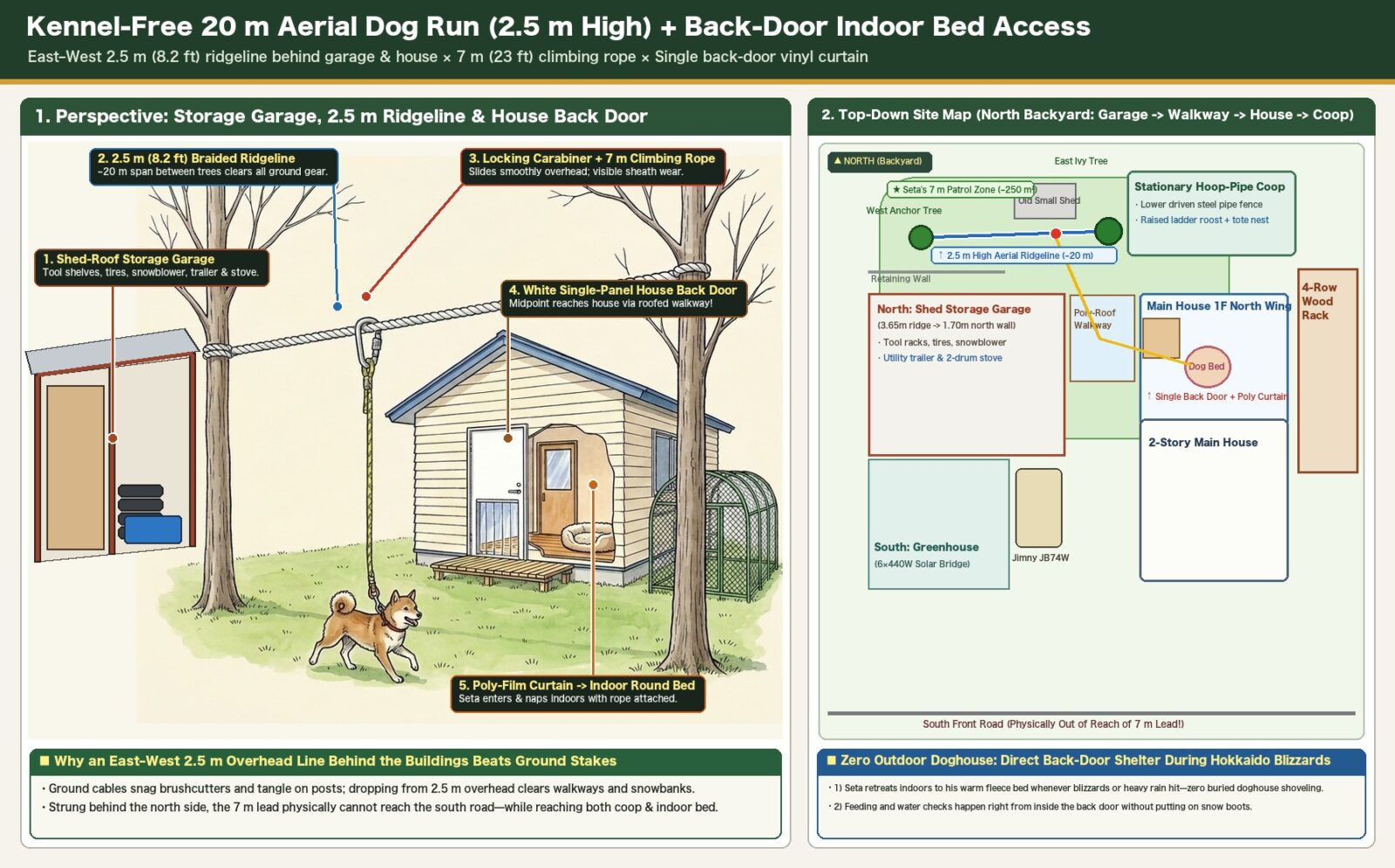
a 2.5 m (8.2 ft) high × ~20 m (65 ft) overhead ridgeline tensioned between trees behind our buildings, a UIAA locking carabiner,
and a 7 m (23 ft) dynamic rock-climbing rope lead whose midpoint aligns directly with a DIY agricultural poly-film strip curtain cut into our cabin’s back door.
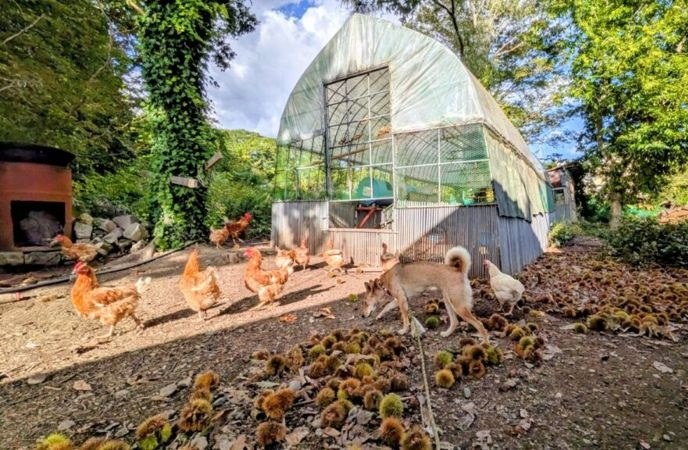
Seta sprints freely across ~250 m² (2,700 sq ft) between the garage and chicken coop, physically cannot reach the south road,
and pushes straight inside onto his indoor fleece bed whenever blizzards hit—all built after a pet-store coated wire cable snapped in under a year and nearly cost him his life.
- 2.5 m Overhead Ridgeline (~20 m Span): Dropping a 7 m lead from 2.5 m overhead clears brushcutters, snowbanks, and stacked gear without ground tangles while physically blocking access to the south road.
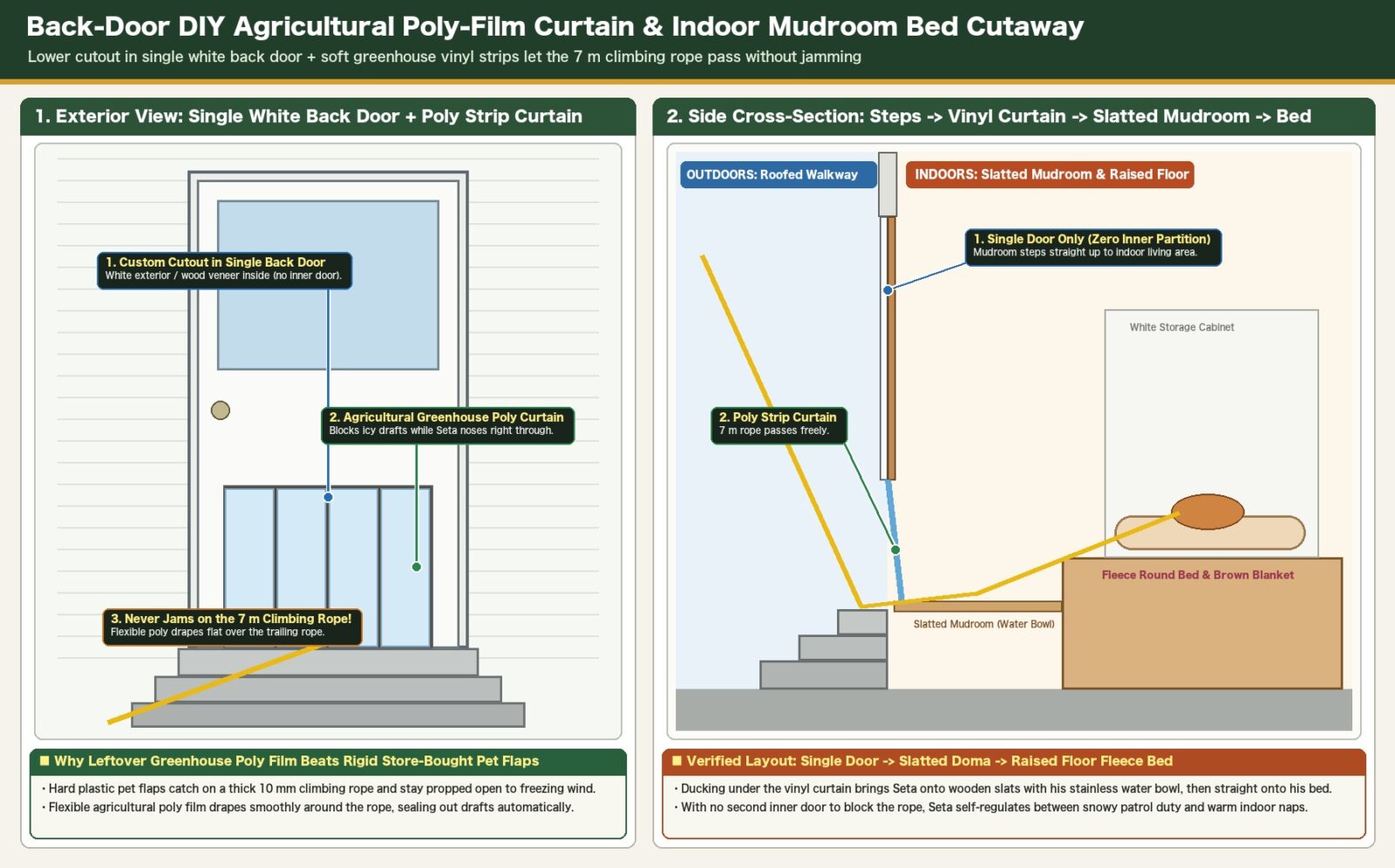
- Zero Outdoor Doghouse (Back-Door Poly Curtain): Cutting a pass-through in our single white back door and hanging leftover greenhouse vinyl strips lets Seta walk indoors to his warm bed with the 7 m rope trailing smoothly—and lets me feed him without stepping outside in snowstorms.
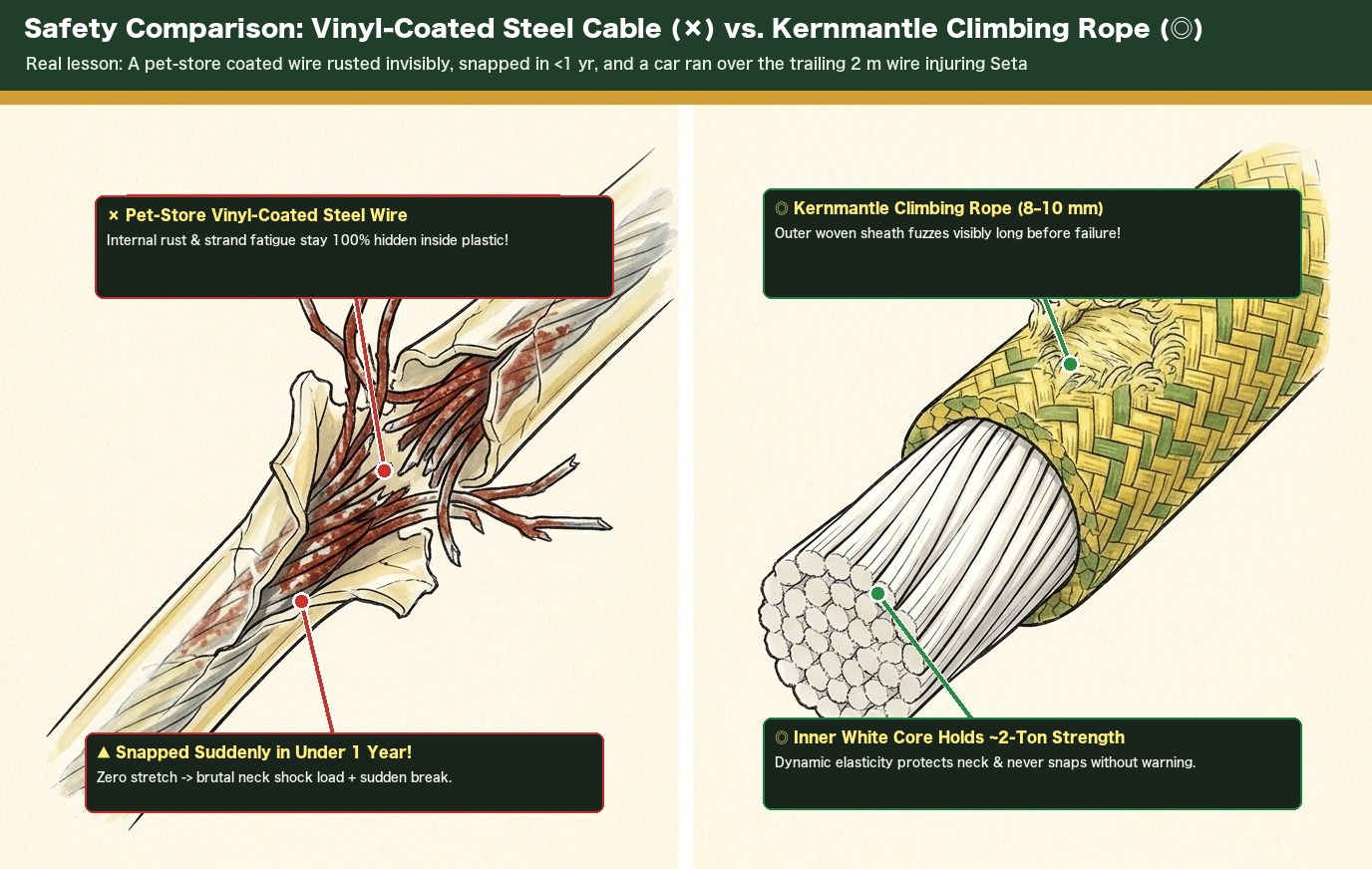
- Never Trust Vinyl-Coated Wire Cables: Thin coated steel cables hide internal rust and snap without warning. An 8.5–10 mm kernmantle dynamic climbing rope cushions sprint shock loads and shows outer sheath fuzzing long before failure.
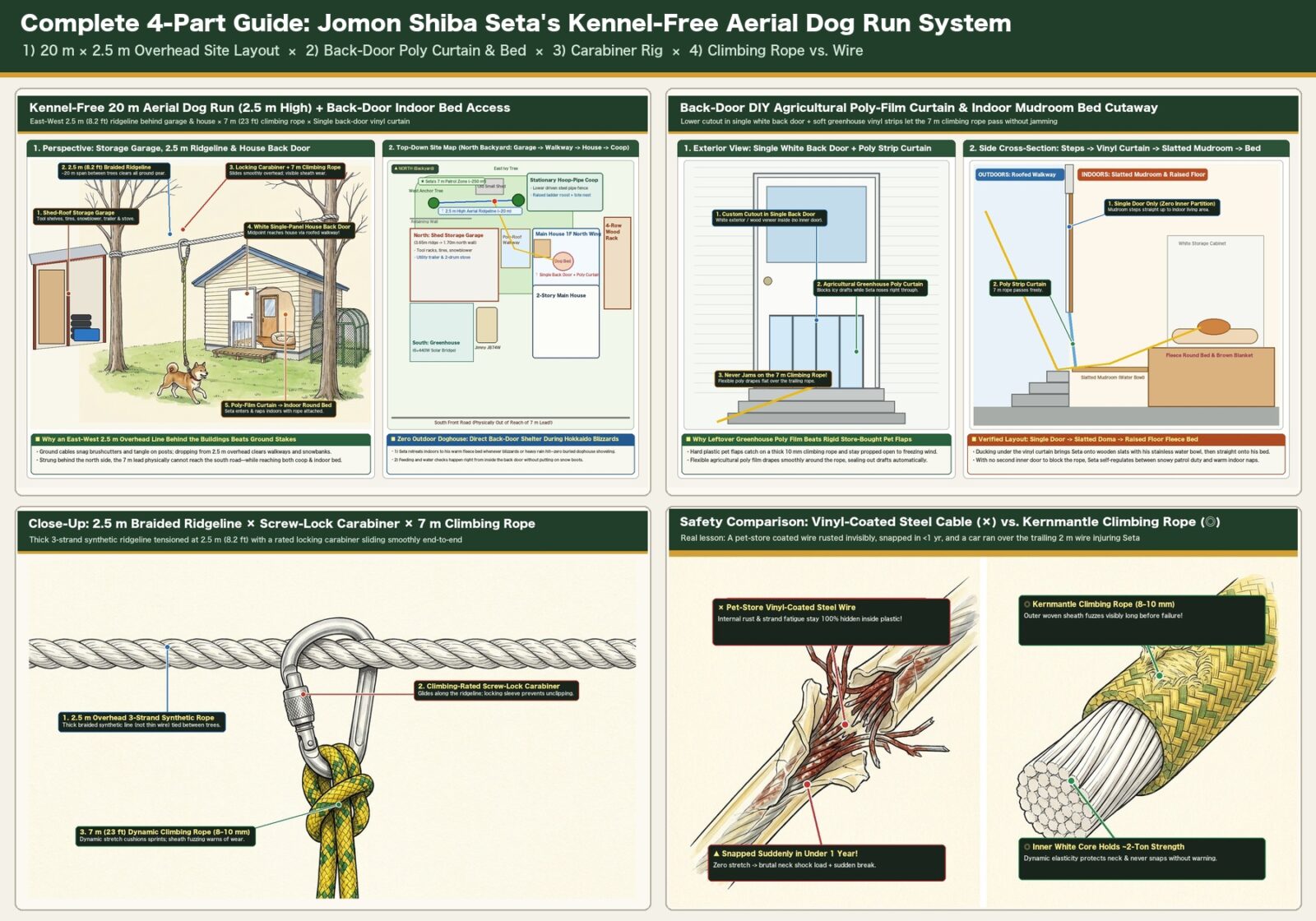
1. Architectural Blueprint: 2.5 m High × 20 m Overhead Ridgeline + 7 m Climbing Lead
Ground-staked tie-outs wrap around every stump, post, and wheelbarrow within five minutes.
By raising the main ridgeline above human head height between a sturdy west anchor tree behind our shed-roof storage garage and
an ivy-covered east tree beside our stationary hoop-pipe chicken coop, the entire system runs on three simple components:
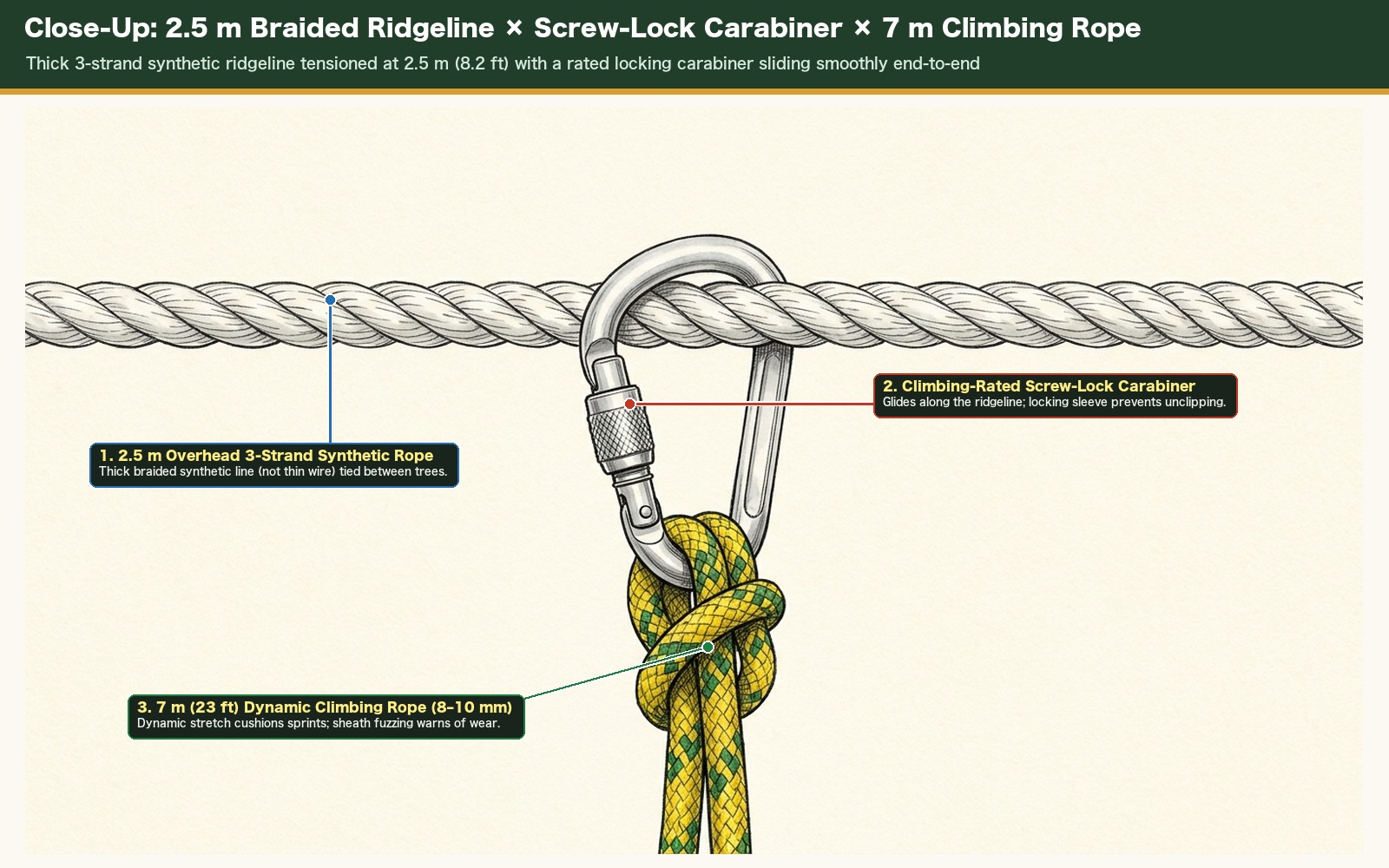
- Overhead Base Ridgeline (~2.5 m / 8.2 ft high, ~20 m / 65 ft long): Thick 3-strand synthetic rope tensioned east–west across the north backyard behind our garage and main house.
- UIAA Screw-Lock Climbing Carabiner (20kN+): Clipped onto the overhead ridgeline so it glides end-to-end without freezing open or unclipping.
- ~7 m (23 ft) Dynamic Climbing Rope Drop Lead: Tied from the sliding carabiner down to Seta’s collar, sweeping an obstacle-free ~250 m² patrol zone from the garage to the chicken coop while stopping well short of the south road.
2. Why We Built Zero Outdoor Doghouse: Direct Back-Door Poly-Film Curtain Access
The best part of this layout is geometric:
right near the midpoint of the 20 m ridgeline—well inside the 7 m rope radius—sits our cabin’s single white back door (opening onto a slatted indoor mudroom/doma and
raised floor with zero inner partition door to block the rope).
By cutting a dog-sized opening in the bottom of that single door by eye and
stapling overlapping strips of leftover agricultural greenhouse poly film (0.1–0.15 mm / 6 mil UV) like a flexible curtain, three daily headaches vanished overnight:
- Zero Buried Doghouse Shoveling: Whenever rain, sleet, or -3°C to -8°C (18–27°F) winter winds blow in, Seta noses through the poly curtain and curls up on his indoor fleece round bed.
- Never Jams on a Thick 10 mm Rope: Rigid plastic store-bought pet flaps snag on a trailing climbing rope and stay propped open to icy drafts. Soft greenhouse vinyl drapes flat right around the rope, sealing out wind automatically.
- Boot-Free Feeding in Blizzards: During howling winter storms, I never have to pull on snow boots—meals, unfrozen water bowls, and belly rubs happen right inside the back mudroom.

3. Real Accident Report: Why Vinyl-Coated Wire Snapped in <1 Year (And Why Climbing Rope Saves Lives)
Why do I insist on real rock-climbing rope instead of standard pet-store tie-out cables?
Because early on, I bought a commercial ~7 m vinyl-coated steel dog cable thinking steel meant strength—and in less than one year, it snapped cleanly in half without warning.
Worse still, Seta trotted out toward the road dragging ~2 m (6.5 ft) of broken wire still clipped to his collar.
A passing car ran right over that trailing steel wire, jerking Seta violently and
injuring him. Thankfully it wasn’t fatal, but I swore on the spot never to trust coated wire cable again.
 けっち
Plastic-coated steel wire looks tough from the outside, which is exactly why it’s dangerous—water creeps inside tiny cracks in the vinyl,
rusting and fatiguing thin wire strands completely out of human sight until the day it snaps.
| Safety Factor | Pet-Store Vinyl-Coated Steel Cable (×) | UIAA Kernmantle Dynamic Climbing Rope (◎) |
|---|---|---|
| Visual Wear Warning | × Invisible: Opaque/tinted plastic sleeve hides internal rust, kinks, and broken wire strands until sudden failure. | ◎ Unmistakable: Thick 8.5–10 mm woven outer sheath (mantle) fuzzes visibly from friction months before the load-bearing core weakens. |
| Sprint Shock Absorption | × Zero Stretch: Static steel delivers a brutal whiplash shock load to your dog’s neck and hardware at full sprint. | ◎ Dynamic Cushion: Engineered to arrest falling climbers—controlled elongation cushions every hard dash after a fox. |
| Breaking Strength | Crimped ferrules & thin strands fatigued and snapped in <1 year. | Multi-filament polyamide core rated around ~2 metric tons (20 kN+); never snaps abruptly. |
4. Frequently Asked Questions
A. Layering heavy UV greenhouse poly strips in overlapping vertical curtains blocks wind surprisingly well—and
opening into an unheated/semi-buffered slatted mudroom (doma) keeps our main wood-heated living space comfortable while
giving Seta draft-free shelter.
A. Cheap zinc/steel spring hooks from hardware stores freeze solid with ice or twist open when a rope rolls under tension.
A hot-forged 20–25 kN screw-lock climbing carabiner (ideally paired with a rated swivel) glides cleanly and cannot accidentally unclip.
Field-Tested Gear Used in This Log
Disclosure: As an Amazon Associate I earn from qualifying purchases at no extra cost to you.
- Heavy-Duty Agricultural Greenhouse Poly Film (0.1mm–0.15mm / 6 Mil UV) — Clear UV-stabilized greenhouse polyethylene film; cut into overlapping strips for our back-door dog curtain. Field note: Blocks sub-zero drafts while letting Seta push straight into his indoor bed. Check US specs on Amazon.com (paid link)
Disclosure: As an Amazon Associate I earn from qualifying purchases at no extra cost to you.
- UIAA/CE Dynamic Climbing Rope (8.5mm–10mm Single Rope) — 2,000+ kgf (20kN+) breaking strength, shock-absorbing dynamic core; zero internal rust unlike vinyl-coated wire. Field note: Replaced snapped pet-store steel cable on Seta's 20m aerial zip-line dog run. Check US specs on Amazon.com (paid link)
Disclosure: As an Amazon Associate I earn from qualifying purchases at no extra cost to you.
- UIAA/CE Screw-Lock Climbing Carabiner (20kN+ Rated) — Hot-forged aluminum/steel locking carabiner rated >20kN major axis; prevents twist-off escapes. Field note: Connects the 2.5m overhead ridgeline to the 7m drop lead without jamming. Check US specs on Amazon.com (paid link)
If this kennel-free aerial zip-line setup helps keep your own homestead guardian safe and happy, you can send Seta a treat via Buy Me a Coffee.





Comments